















Simulation in healthcare is now recognized as a strategic tool for improving the quality of healthcare systems, but the role of the simulation technology specialist (STS) remains poorly defined, with wide variability in terminology and skills at the national and international level. Here, we analyze the professional profile of the STS through a narrative review of the literature published between 2014 and 2024, including nine sources selected from peer-reviewed studies and national strategic documents. The survey highlights heterogeneity in the terms used for the profession, differences in training paths, and competencies divided into eight macro-areas, from audiovisual technologies to training, research, and management of simulation centers. Although international certifications such as CHSOS provide standardization tools, gaps in training and regulation remain in Italy and Europe.
Research Article
Introduction
In recent decades, the healthcare training landscape has undergone a significant transformation thanks to the introduction of simulation technologies. What was initially an innovative and experimental approach is now recognized as a teaching methodology based on solid scientific evidence, capable of ensuring the development of both clinical and transversal skills in controlled contexts that are risk-free for patients (Issenberg et al., 2005).
Parallel to the technological evolution of simulation systems, there has been a growing need for highly specialized professionals to manage the technical and operational aspects of centers dedicated to this training methodology (Rosen, 2008). This need has given rise to the role of Simulation Technology Specialist (STS), a professional who is currently at the center of an ongoing academic and professional debate.
However, the definition of this new professional profile presents several complexities that emerge from an analysis of the international literature, where there are significant terminological and functional discrepancies that underscore a standardization of the role and associated skills (Lowther & Armstrong, 2023). This variability probably reflects the interdisciplinary nature of simulation in the medical field, which draws on diverse fields such as biomedical engineering, medical pedagogy, and cognitive sciences.
The Italian context has seen an important regulatory development with the publication, in July 2022, of the national strategic document drawn up by the Ministry of Health. This document represented the first institutional attempt to formally define the role of the STS, specifying their areas of professional competence and responsibility (Ministry of Health, 2022). Despite this significant step forward, fundamental questions remain regarding the most appropriate training paths, the certification systems to be adopted, and the minimum standards of competence to be guaranteed.
This review stems from the desire to contribute to the definition of this professional profile through a systematic analysis of the available literature, with the aim of identifying and characterizing the role of the Simulation Technology Specialist, paying particular attention to the skills considered essential, the existing training opportunities, and the different professional certification models adopted both nationally and internationally.
Results
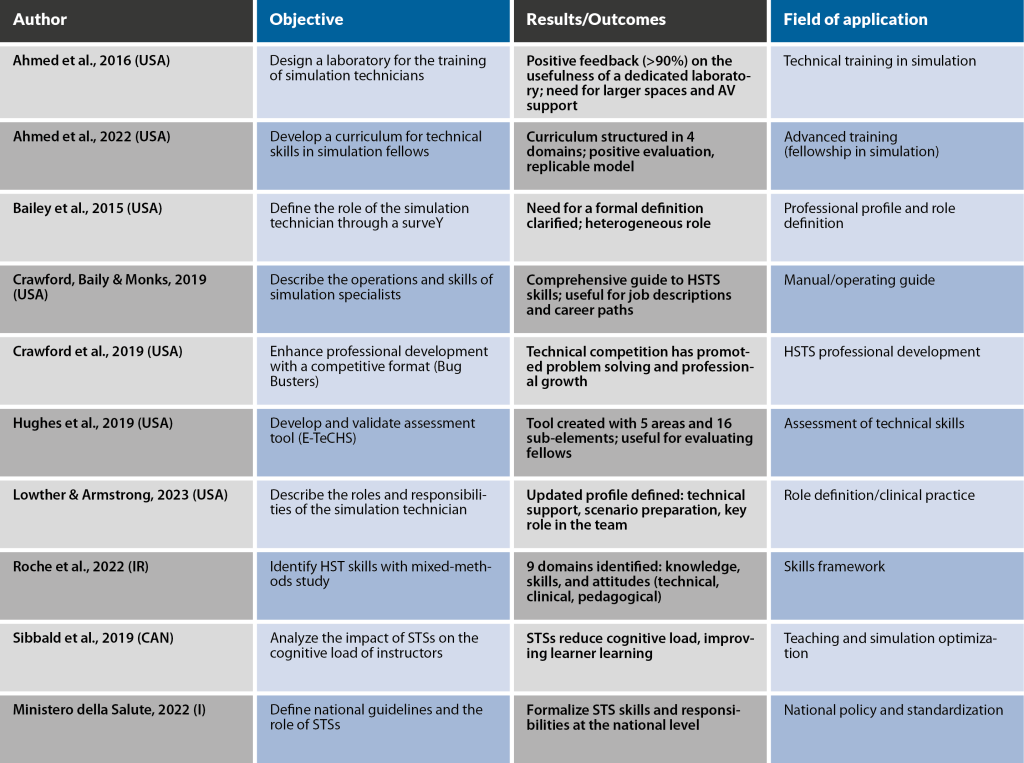
The selection process initially identified 57 studies which, after screening based on the analysis of titles, abstracts, and year of publication, led to the selection of 7 articles, 1 scientific reference text, and 1 national document, for a final corpus of 9 sources that formed the basis of the analysis conducted in this work.
The analysis of the selected literature identified four macro-areas of interest relating to the role of Simulation Technology Specialist, highlighting both the existing critical issues and the development prospects of this emerging profession.
Terminological variability and professional definitions
One of the main critical issues that emerged concerns the terminological heterogeneity used to identify this professional figure. The international literature presents a multiplicity of names and the diversity of the operational contexts in which it operates. Lowther and Armstrong (2023) use the term “Simulation Technicians,” while Ahmed et al. (2022) refer to “Simulation Technology Specialists.” Roche et al. (2022) introduce the definition of “Healthcare Simulation Technicians (HST),” equating them with “simulation operations specialists.” Bailey et al. (2015) opt for “Healthcare Simulation,” while Crawford et al. (2019) define them as “Health Simulation Technician Specialists (HSTS)”.
This variety of terminology reflects the different disciplinary backgrounds of the professionals who fill this role, ranging from traditional healthcare (nurses, doctors, doctoral students) to engineering, computer science, telecommunications, and education sciences. As Lowther & Armstrong (2023) point out, the Simulation Technology Specialist is “a professional who specializes in the technologies and methods used to plan, prepare, and execute simulation-based healthcare training and education events,” making them an essential member of any simulation team.
Roche et al. (2022) further highlight the complexity of finding a definition, describing the STS as “a multifaceted role” characterized by a wide range of competencies in terms of knowledge, skills, and attitudes that are difficult to identify and structure. This lack of clarity creates significant difficulties in finding suitable candidates, so much so that the survey by Crawford et al. (2019) among simulation center directors in the US revealed that only 2% of respondents were able to identify suitably trained individuals to fill these positions.
Competency framework and specific competencies
Identifying core competencies is crucial for standardizing the professional profile. Two international organizations have developed specific competency frameworks: SimGHOSTS (The Gathering of Healthcare Simulation Technology Specialists) and SSH-SOTS (Society for Simulation in Healthcare – Simulation Operations and Technology Section). Both societies developed structured frameworks using the Delphi method in 2013, with SSH identifying five competency areas and SimGHOSTS identifying eight: (1) audio/visual technologies, (2) information technologies, (3) training, (4) healthcare terminology and practice, (5) management, (6) research and evaluation, (7) simulation, and (8) theatrical techniques.
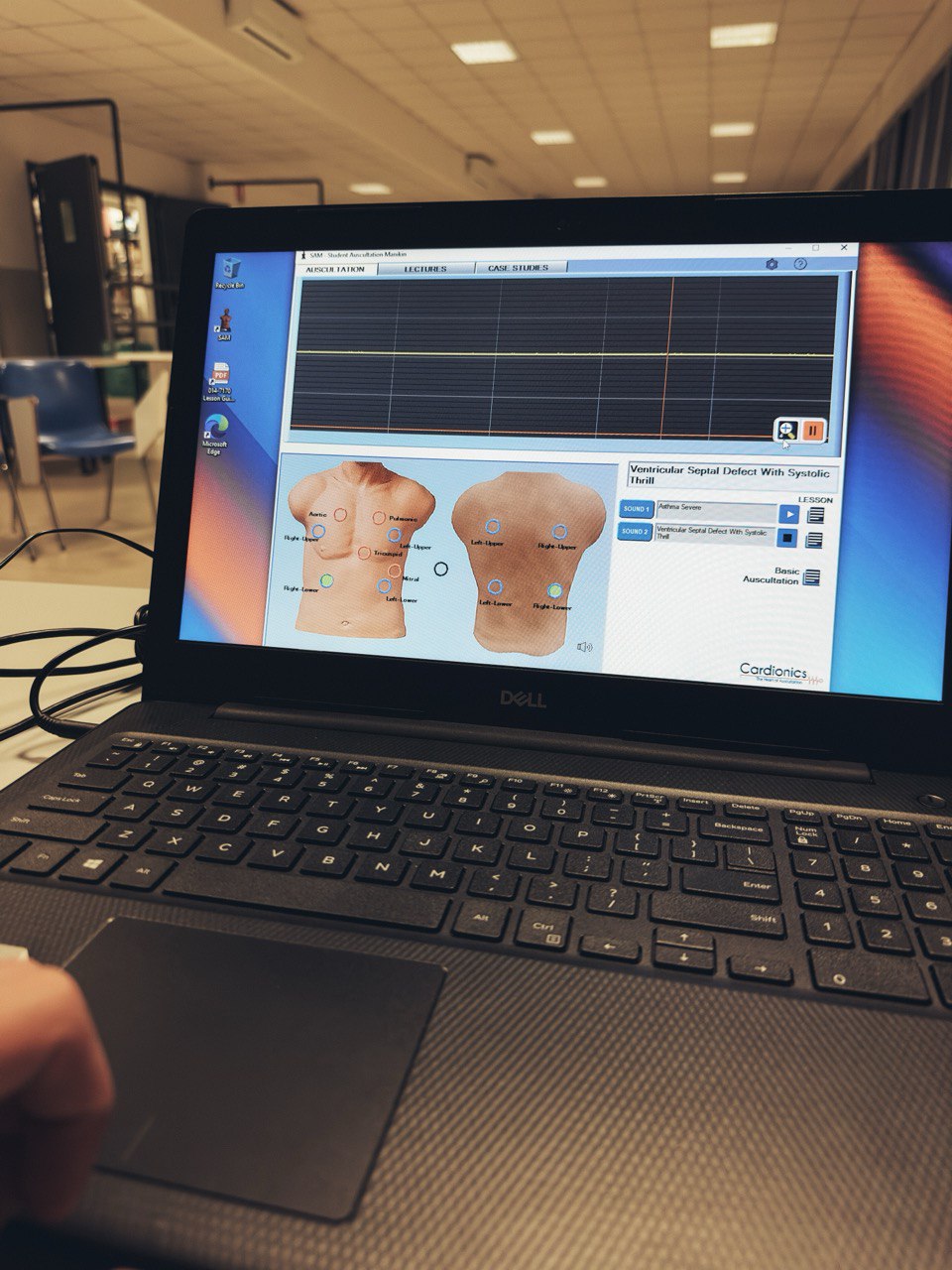
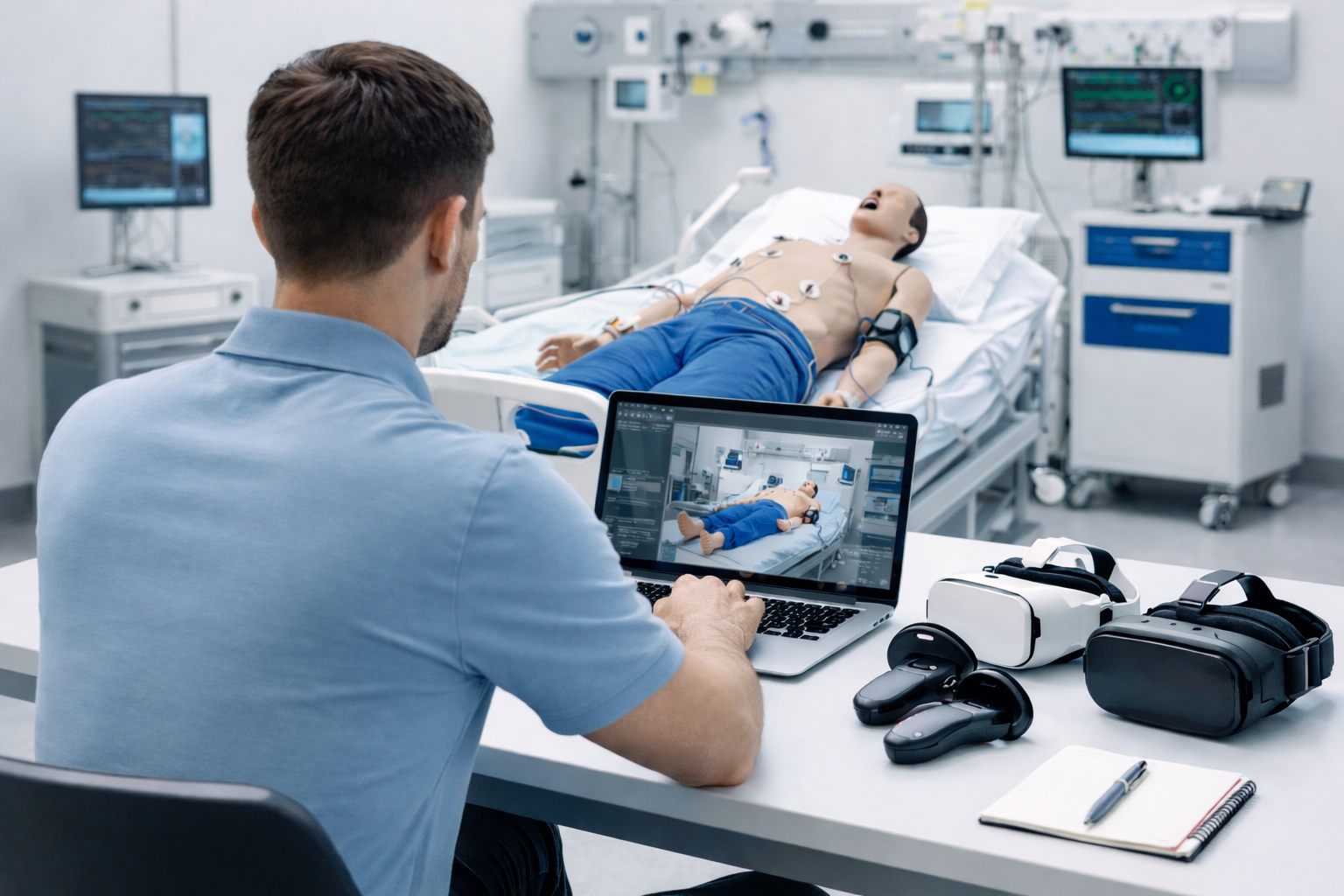
In the field of audio/visual technologies, specific competencies include the use of complex digital equipment (cameras, video cameras, audio/video mixers, recording software), the configuration and maintenance of audiovisual systems, recording and editing, and the management and archiving of multimedia content. With regard to information technology, the STS must have skills in the installation and maintenance of IT infrastructure, server and learning management system administration, technical support for users, and ensuring IT security. Simulator management is perhaps the most specialized area, requiring in-depth knowledge of the installation, configuration, operation, and troubleshooting of various devices. As highlighted by Crawford et al. (2019) point out, the STS is often “the only person with full knowledge of the characteristics and operation of a simulated training tool,” taking on extensive responsibilities that include preventive maintenance, inventory management, and repair coordination. Ahmed et al. (2022) emphasize the importance of maintenance skills, which include reviewing technical manuals, supervising internal mechanisms, preventing deterioration, and managing operating configurations.
The theatrical and stagecraft aspects complete the skill set, requiring creativity in the preparation of props, soundscapes, lighting, and moulage techniques to maximize the sensory realism of the learning environment.
Operational impact and training paths
The impact of STSs in the medical simulation ecosystem has been the subject of specific research. Sibbald et al. (2019) demonstrated that the presence of STS significantly reduces the cognitive load on instructors, allowing them to focus on observing learners and adapting scenarios rather than on the technical management of equipment. This highlights the added value that these professionals bring to the overall quality of training.
From a training perspective, research conducted by Crawford et al. (2019) on 67 job offers identified different levels of access to the profession. Entry-level positions generally require a high school diploma accompanied by specific professional qualifications or healthcare certifications. Intermediate positions, on the other hand, require university qualifications or equivalent combinations of training and experience in IT, audiovisual, or healthcare fields.
The most internationally recognized certification is CHSOS (Certified Healthcare Simulation Operations Specialist) offered by SSH, which is required in 15% of the positions analyzed. This certification focuses on the practical aspects of simulation, including different types of simulators, audiovisual devices, program and inventory management, with elements of instructional design and basic healthcare concepts.
Hughes et al. (2020) developed and validated the E-TeCHS (Evaluation of Technical Competency in Healthcare Simulation) tool through two cycles of the Delphi method, identifying five core competencies: use of software during simulations, simulator programming, basic maintenance, equipment setup and dismantling, and audiovisual support for scenarios.
The Italian context: regulatory and operational perspectives
In Italy, in July 2022, the Ministry of Health provided the first institutional definition of the Simulation Technology Specialist through the “Guidelines on the development of simulation in healthcare in Italy.” The document, the result of the work of a technical committee established by Ministerial Decree on April 7, 2022, defines the STS as a professional with “adequate competence to plan and execute all operational and technical aspects of simulated learning activities.”
The skills identified by the Italian technical committee, and collected in a recently published position paper (Ingrassia et al., 2025), include eight specific areas: (1) design of activities and scenarios in collaboration with facilitators, (2) setup and preparation of simulated environments, (3) management and technical assistance during activities, (4) use and maintenance of devices, (5) design and implementation of advanced technological solutions (virtual reality, augmented reality, 3D printing), (6) design of solutions for immersion through moulage, (7) educational support for facilitators and users, and (8) contribution to the strategic planning of technical infrastructure.
This Italian approach has elements in common with international frameworks, while maintaining specific features related to the national healthcare context and the organizational peculiarities of the Italian education system. The ministerial document explicitly emphasizes that there is “no presumption of exhaustiveness” in the work carried out, recognizing the complexity of the issue and the need for further regulatory and operational developments.
Discussion
The results of this study are part of a scientific context that highlights the growing importance of professional standardization in the field of healthcare simulation, as demonstrated by recent initiatives by leading international organizations and emerging empirical evidence.
Professional standardization: from fragmentation to convergence
The terminological variability identified in our results reflects a broader issue recognized by leading international scientific societies. The SSH developed the CHSOS program precisely to provide “an inclusive umbrella term that incorporates many different roles in healthcare simulation operations, including simulation technician, simulation technology specialist,” explicitly recognizing the terminological fragmentation that emerged from our analysis.
This approach to standardization is supported by evidence from the scientific literature, where Cook et al. (2011), in a systematic review of 609 studies on medical simulation, emphasized that the effectiveness of training interventions depends significantly on the quality of technical and operational support. The recent scoping review by Tellefson et al. (2025) confirmed the importance of the role of the simulation technician in health sciences education, highlighting the need for greater professional definition. The convergence towards common standards is further supported by the Healthcare Simulation Standards of Best Practice™ developed by the International Nursing Association for Clinical Simulation and Learning (INACSL. 2021). These standards, defined as “policies established by consensus and approved by a recognized body that provide criteria and required elements for achieving simulation outcomes,” provide a structured framework for the development of effective simulation experiences, within which the STS plays a crucial role.
Impact on training quality: empirical evidence
The operational importance of STSs, which emerged in the work of Sibbald et al. (2019), confirms what was already indicated in the meta-analysis by Motola et al. (2013), which analyzed over 600 studies, highlighting significant associations between simulation-based training and improved knowledge, skill, and behavior outcomes and moderate effects on patient-related outcomes, suggesting that the effectiveness of simulation also depends on the quality of technical and operational support.
Evolution of the competency profile: towards an integrated model
The eight-domain competency framework identified by SimGHOSTS and SSH-SOTS, which emerged from the analysis, represents an attempt at systematization that finds parallels in the most recent scientific evidence. Roche et al. (2022), in a mixed-methods study, identified similar competencies through the analysis of job descriptions and semi-structured interviews, confirming the multifaceted nature of the role.
The SSH definition of Operations Specialist as “an individual whose primary role is the implementation and delivery of a simulation activity through the application of simulation technologies such as computers, audio-visuals, or network technologies” converges with the competency domains identified in our study, suggesting an emerging consensus in the international scientific community.
The introduction of CHSOS-Advanced (CHSOS-A) certification by SSH represents recognition of the evolution of the professional profile. This portfolio-based certification is intended for “leaders in healthcare simulation operations” and “distinguishes those who have demonstrated that they are advanced operational specialists in their practice and serve as mentors and examples for others in the field,” reflecting the transition from purely technical skills to a more strategic and educational profile.
Prospects for future research and development
The Italian context, with its 2022 ministerial guidelines, is positioned innovatively with respect to the international landscape, integrating elements of strategic design and emerging technologies. This approach anticipates developments that could influence future international standards, particularly in the integration of virtual reality, augmented reality, and artificial intelligence into simulation programs. There are still no clear and shared European guidelines in this area, as the issue has not yet been analyzed globally.
Implications for healthcare practice and policy
The SSH Accreditation Standards, which examine “the processes and outcomes of simulation programs in assessment, research, teaching/education, and systemic integration” and are “regularly updated,” provide a framework for integrating STSs into healthcare systems. The growing emphasis on the accreditation of simulation centers highlights the importance of qualified professionals to ensure high quality standards.
International experience suggests that investing in STS training and certification is a cost-effective strategy for improving the effectiveness of healthcare training programs. However, further research is needed to quantify the return on investment and develop sustainable economic models for integrating these professionals into national healthcare systems.
The convergence between international standards and national approaches, highlighted by the comparison between the SSH/SimGHOSTS frameworks and the Italian guidelines, suggests the possibility of developing global standards that maintain flexibility for local specificities, a crucial element for international professional mobility and the exchange of best practices.
Conclusions
This narrative review of the literature aimed to describe the role and skills of the Simulation Technology Specialist (STS). Analysis of the sources reveals the multifaceted nature of this role and the complexity of defining a single educational background. International organizations such as SimGHOSTS have proposed structured frameworks, identifying eight macro areas of competence, while at the national level, the Technical Committee of the Ministry of Health (2022) represented the first institutional attempt to outline the role of the STS and the related expected competencies in Italy.
A key element that emerges is the importance of considering the STS as an integral part of a simulation team, in which each role—from trainer to technical operator—contributes essential to the success of the training experience. STSs, in particular, play a crucial role in ensuring the fluidity of scenarios, reducing the cognitive load on instructors, and enabling the delivery of highly immersive experiences. Through cross-cutting skills ranging from audiovisual to IT and stagecraft, these professionals enhance the effectiveness of debriefings and, consequently, the learning of trainees.
Materials and Methods
To explore the professional profile of the Simulation Technology Specialist, a narrative review of the scientific literature published between 2015 and 2025 was conducted. This time frame was chosen to capture recent developments in a rapidly evolving field, considering that the role of the STS has only begun to consolidate in the last decade.
The search strategy involved five of the main biomedical databases: PubMed, CINAHL, Embase, Scopus, and PsychInfo, using specific keywords, including “simulation technician,” “healthcare simulation technician,” “simulation technology specialist,” “healthcare simulation operations,” and “simulation technologist.” The terms were linked using Boolean operators to maximize the sensitivity of the search and capture the variety of terminology present in the international literature.
Publications in English, German, and Italian were included, with a specific focus on the role of the simulation technician or specialist, paying particular attention to the description of the skills, roles, and responsibilities associated with this profession. Both empirical studies and theoretical contributions were considered, provided they provided useful elements for characterizing the professional profile.
All contributions that were not directly relevant to the research topic, gray literature not subject to peer review, and individual case reports lacking elements of generalizability were excluded.
BIBLIOGRAPHY
- Ahmed, R. A., Cooper, D., Mays, C. L., et al. (2022). Development of a simulation technical competence curriculum for medical simulation fellows. Advances in Simulation, 7(1), 1–12. https://doi.org/10.1186/s41077-022-00210-7
- Bailey, R., Taylor, R. G., FitzGerald, M. R., et al. (2015). Defining the simulation technician role: Results of a survey-based study. Simulation in Healthcare, 10(5), 283–287. https://doi.org/10.1097/SIH.0000000000000108
- Cook, D. A., Hatala, R., Brydges, R., Zendejas, B., Szostek, J. H., Wang, A. T., … & Hamstra, S. J. (2011). Technology-enhanced simulation for health professions education: A systematic review and meta-analysis. JAMA, 306(9), 978-988. https://doi.org/10.1001/jama.2011.1234
- Crawford, S. B., Baily, L. W., & Monks, S. M. (2019). Comprehensive healthcare simulation: Operations, technology, and innovative practice. Springer. https://doi.org/10.1007/978-3-030-01096-5
- Crawford, S., Monks, S., Bailey, R., & Fernandez, A. (2019). Bug Busters: Who you gonna call? Professional development for healthcare simulation technology specialists. Advances in Simulation, 4(1), 1–8. https://doi.org/10.1186/s41077-019-0094-1
- Hughes, P. G., Atkinson, S. S., Brown, M. F., et al. (2020). Evaluation of technical competency in healthcare simulation (E-TeCHS) tool: A modified Delphi study. BMJ Simulation & Technology Enhanced Learning, 6(1), 15–21. https://doi.org/10.1136/bmjstel-2018-000419
- INACSL Standards Committee, Charnetski, M., & Jarvill, M. (2021). Healthcare simulation standards of best practice™: Operations. Clinical Simulation in Nursing, 58, 33–39. https://doi.org/10.1016/j.ecns.2021.08.008
- Ingrassia, P. L., Barelli, A., Benedetti, E., et al. (2026). A National Position Paper for the Strategic Development of Health Care Simulation in Italy. Journal of patient safety, 22(1), 78–85. https://doi.org/10.1097/PTS.0000000000001393
- Issenberg, S. B., McGaghie, W. C., Petrusa, E. R., et al. (2005). Features and uses of high-fidelity medical simulations that lead to effective learning: A BEME systematic review. Medical Teacher, 27(1), 10–28. https://doi.org/10.1080/01421590500046924
- Lowther, M., & Armstrong, B. (2023). Roles and responsibilities of a simulation technician. In StatPearls [Internet]. StatPearls Publishing. https://www.ncbi.nlm.nih.gov/books/NBK601740/
- Ministero della Salute. (2022). Documento strategico nazionale del Tavolo tecnico dedicato alla promozione della simulazione in ambito sanitario. https://www.salute.gov.it/
- Motola, I., Devine, L. A., Chung, H. S., Sullivan, J. E., & Issenberg, S. B. (2013). Patient outcomes in simulation-based medical education: A systematic review. Journal of General Internal Medicine, 28(8), 1078-1089.
- Roche, A. F., Condron, C. M., Eppich, W. J., & O’Connor, P. E. (2022). A mixed methods study identifying the competencies of health care simulation technicians. Simulation in Healthcare, 17(4), 234–242. https://doi.org/10.1097/SIH.0000000000000612
- Rosen, K. R. (2008). The history of medical simulation. Journal of Critical Care, 23(2), 157–166. https://doi.org/10.1016/j.jcrc.2007.12.004
- Sibbald, M., Caners, K., & Wang, B. (2019). Managing cognitive load in simulations: Exploring the role of simulation technologists. Canadian Medical Education Journal, 10(4), e48–e56. https://doi.org/10.36834/cmej.56821
- Society for Simulation in Healthcare. (n.d.). CHSOS certification program. Retrieved August 26, 2025, from https://www.ssih.org/Credentialing/CHSOS
- Tellefson, F., Dawson, K., Zhang, N. M., Dickie, R., Coyte, B., & Jacob, A. (2025). The role and impact of the simulation technician in health science higher education: A scoping review. Clinical Simulation in Nursing, 100, 101695. https://doi.org/10.1016/j.ecns.2025.101695
READ ALSO