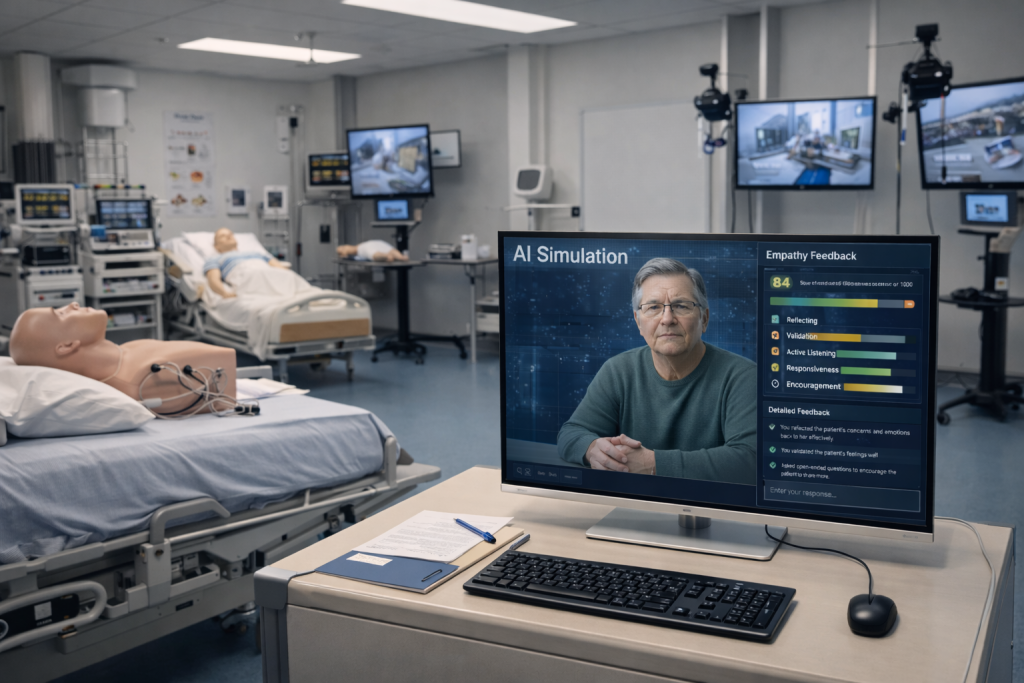

















When it comes to simulation center design, most programs discover their biggest problems only after opening day. In this expert brief, Ferooz Sekandarpoor, founder of BrainNet Consulting Inc., shares his thoughts and lessons from visiting and designing dozens of centers worldwide. From AV system failures and acoustic mistakes to poor space planning and lighting design, learn how early expert consultation saves millions and prevents the hidden operational issues that beautiful buildings often conceal.
Written in collaboration with BrainNet Consulting Inc.

I have helped more than 20 simulation centers over the years. I have also toured many simulation centers, small and big, all over the world. During these tours of state-of-the-art facilities with beautiful design and expensive technology, directors walk me through their new space. Then they pull me aside.
- “We spent millions on AV systems. We are not happy with them. The people who selected this equipment never knew what we actually needed. Our budget exploded.”
- “The room is either too big or too small. We did not plan the space right.”
- “The acoustics are terrible. The HVAC noise bleeds into the AV system. We cannot get clean audio.”
- “Nobody specified dimmable lights in the big labs. The lighting is fixed. We cannot adjust it for different scenarios.”
- “We installed lights with no zoning. We turn on one section and the whole room lights up.”
- “We put in two headwalls that cost significant money. We use neither of them.”
- “The room size and door dimensions limit what we can do with equipment. We cannot fit certain manikins or setup configurations.”
- “We did not budget for AV infrastructure at the start. Now we cannot install the systems we need because the electrical and network requirements are astronomical.”
- “We have an office right next to the simulation lab. Nobody can work there. The noise is constant.”
These are not complaints from one struggling program. These are patterns from dozens of new facilities I have toured. Facilities that look beautiful. Facilities that spent substantial money. Facilities that opened their doors and discovered what they wish they had solved during design.
They all say the same thing:
If we had consulted with someone who had designed multiple centers before we broke ground, we could have prevented this.
Why This Happens
Your simulation educator knows what skills students need to practice.
Your architect knows how to design functional buildings.
Your IT director knows how to specify networks.
Your AV salesperson knows their equipment catalog.
None of them fully understand how these decisions intersect in a simulation environment.
Your educator asks for “good AV.” Your architect allocates budget. Your AV vendor sells a comprehensive system. Nobody steps back and asks: what are the actual requirements? What are the tradeoffs? What will this cost to support and maintain? Does our electrical infrastructure support this? Will HVAC noise corrupt the audio?
One person specifies AV without understanding the room acoustics. Another designs the room without understanding the electrical demands. Another handles HVAC without knowing it will ruin audio quality. Decisions made in isolation create problems in operation.
The Space Problem
Rooms sized without understanding workflow become either storage facilities or bottlenecks. I toured a facility where the simulation lab was designed too large. The team cannot afford to staff or equip it properly. Empty space sits unused while learners wait for access to the one configured area.
Another facility built rooms too small. Instructors cannot move around manikins. Setup options are limited. The space that looked sufficient on blueprints feels claustrophobic in operation.
Doorways matter. I have seen facilities where manikins’ stretchers do not fit through the doors. Larger equipment like anesthesia machines, C-Arm X-rays cannot move between rooms. This creates logistical nightmares that could have been solved with basic planning.
The Lighting Mistake
Someone specified standard fixed lighting. No dimmers. No zones. The lights come on full brightness for every scenario. The team cannot adjust lighting to match clinical environments. They cannot dim lights for certain learning activities. They cannot zone lighting so one room operates independently from another.
This seems like a small issue. It is not. Lighting affects learning outcomes. It affects instructor confidence. It affects how realistic scenarios feel. The cost to retrofit dimmable, zoned lighting is substantial if not planned from the start.
The Headwall
Headwalls are expensive. They also look impressive in design presentations. I have toured two facilities where beautiful headwalls sit unused.
Nobody asked the critical question: will we actually use this? One facility installed headwalls for procedures they rarely teach. Two headwalls that are wrongly positioned that cannot be used. The headwall provides no value but consumed capital and wall space.
The AV Problem Nobody Anticipates
I have seen AV systems that cost millions and failed to deliver. Here is why: nobody with simulation experience specified them.
The vendor shows features. The team buys features. Six months in, they realize they bought capabilities they do not need and missed capabilities they do. The budget is already spent. The system is installed.
One center told me their AV system cost double what it should have because the team added features a vendor convinced them they needed. Features they never touch. Meanwhile, they lack basic functions they actually use daily.
Another center learned too late that their chosen system cannot integrate with their manikins. The systems do not communicate. The workarounds are expensive and cumbersome.
The Acoustic Failure
Sound travels. Architects know this academically. They design simulation labs without understanding the specific acoustic requirements.
HVAC systems pump noise directly into the space. Recording systems pick up the constant hum. Instructors struggle to hear each other during debriefing. Learners cannot focus. The audio in recorded sessions becomes unusable.
One facility installed an office directly adjacent to the simulation lab. They did not account for noise transmission. That office is now unusable. Nobody can work there. The space sits empty while they lease expensive office space elsewhere.
The Infrastructure Trap
The worst problem emerges years after opening. Teams realize they want to add AV capability to rooms that were not wired for it. The infrastructure requirements are astronomical. Retrofitting electrical and networking costs more than doing it right during design.
One facility told me they could have added infrastructure for 50,000 dollars during construction. Adding it now costs 180,000 dollars. They are paying for that planning mistake every year they cannot access that capability.
What Prevents These Problems
Someone needs to review every major decision through an operational lens. Not during design development. From the beginning. Before the architect finalizes the plan.
This person should have designed multiple centers. They should know what works and what fails. They should ask the hard questions early, when changes cost money instead of costing operational dysfunction.
They should review room sizes against actual workflow. They should specify AV requirements based on real teaching needs, not vendor capabilities. They should plan acoustic treatment before the HVAC engineer makes their decisions. They should specify lighting with the dimming and zoning needed for different scenarios. They should verify every specification against what programs actually use.
This is not adding bureaucracy. This is preventing costly mistakes.
What Good Planning Actually Saves
Working with many centers over the years, I have seen the real money waste happen in ways nobody tracks.
Centers buy equipment they do not use. A manikin purchased and placed in storage. A curriculum was not ready when the equipment arrived. Warranty time expired while the equipment sat in a box. The center lost years of useful life before anyone touched it.
Centers buy too much equipment. They purchase systems to cover every possible scenario. Those scenarios never happen. The budget that could have upgraded the core systems went to equipment that gets used twice a year.
Centers get over-specified AV systems. The vendor sold them everything. The team bought features they do not need. Equipment that does the job costs half as much but nobody asked the right questions during selection.
Storage fills with equipment that was hardly opened. Capital tied up in something that sits unused. That money could have gone to faculty development, curriculum support, or maintenance.
One center I worked with avoided these mistakes. They planned before they bought. They specified based on what they would actually teach. They avoided overbidding. They did not lose warranty time. Their storage stays organized. Their budget went to things they use.
I cannot give you exact numbers. What I know is certain: centers that plan ahead spend less money overall and get more value from what they buy.
What You Should Ask Right Now
Before you finalize your design or break ground, ask these questions:
- has anyone on our team designed multiple simulation centers?
- does anyone understand how AV requirements, room acoustics, electrical infrastructure, lighting needs, HVAC design, and workflow all intersect?
- does anyone know what we will actually use versus what looks impressive on plans?
If the answer is no to any of these, you need to hire someone who has the answers.
I see your facility only after you open the doors. The best centers I have toured included someone during design who understood how every decision affects every other decision. The most frustrated leaders built beautiful spaces. Then they operated them and found what does not work.
What problems did you encounter after your simulation center opened that you wish you had planned for during design?
READ ALSO