















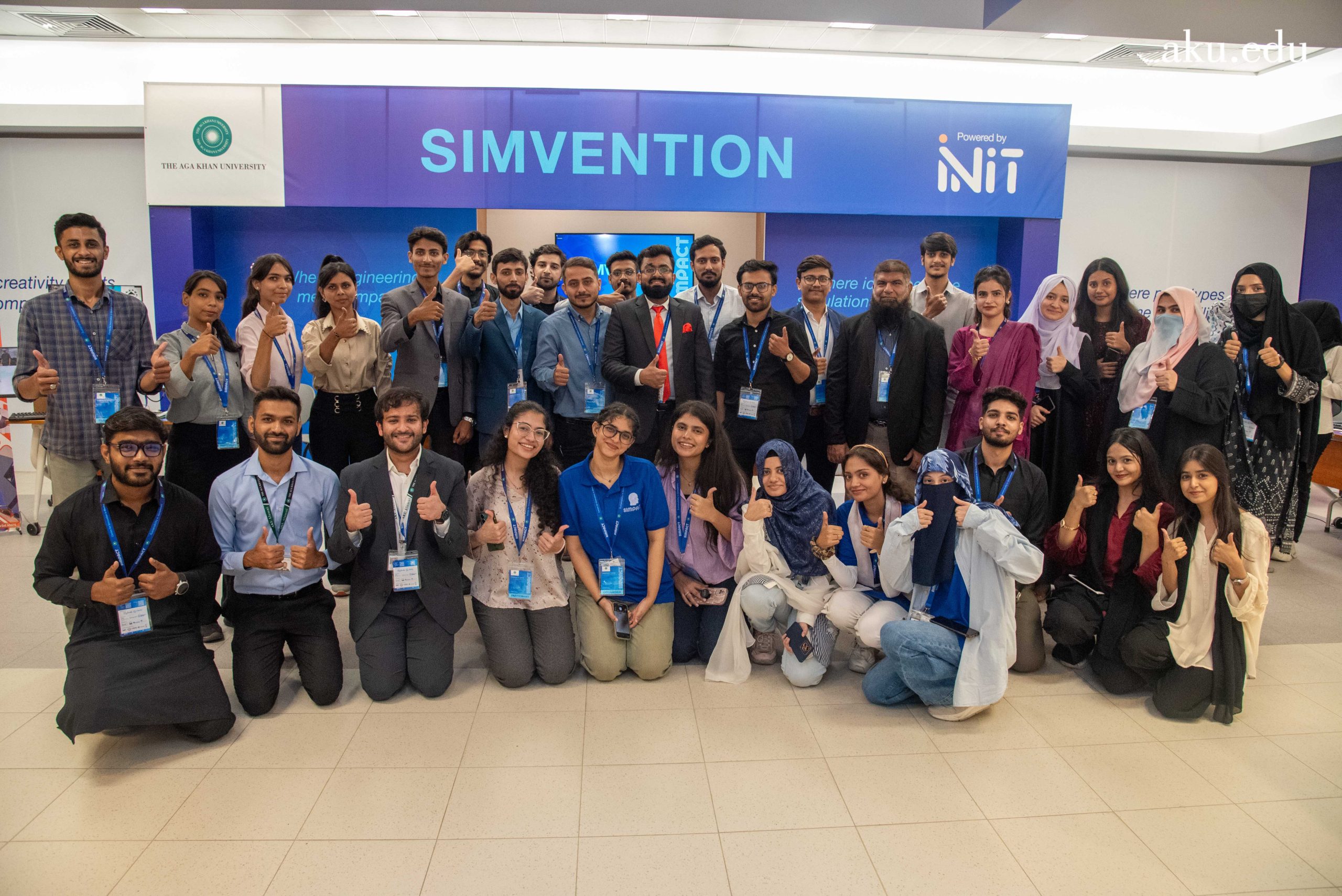
SIMVENTION, launched at SIMPACT 2025 by the Aga Khan University Centre for Innovation in Medical Education, Pakistan, is a structured innovation platform dedicated to advancing healthcare simulation. Designed to bridge academia and industry, SIMVENTION brought together engineers, clinicians, educators, and technology developers to translate ideas into practical solutions. Through a rigorous selection process and industry-led evaluation, the initiative supported innovation across artificial intelligence, extended reality, and simulation-based education, fostering a sustainable ecosystem for future healthcare technologies.
Innovation in healthcare simulation rarely happens by chance. It grows when people, ideas, and opportunities meet in the right space. That space is exactly what we set out to create through SIMVENTION, a platform designed not just to accelerate simulation technology, but to bridge the long-standing gap between academia and industry, and to empower the next generation of engineers, clinicians, educators, and tech enthusiasts who want to build the future.
SIMVENTION was built on a simple but powerful idea: when people are given a platform to build, test, fail, redesign, and showcase their innovations, the entire simulation community moves forward.
SIMPACT, The Aga Khan University Centre for Innovation in Medical Education, AKU-CIME’s annual international conference on healthcare simulation, provided the gathering.
SIMVENTION, a health tech innovation showcase at SIMPACT 2025, provided the spark, and the pathway for innovators to turn ideas into meaningful technological contributions.
Why SIMVENTION?
Despite the steady expansion of simulation-based education, our region has long lacked a cohesive environment in which innovation could be systematically developed. There has been no dedicated space for experimentation, no effective bridge between academic research and industrial application, and no structured pathway to support the translation of simulation-oriented ideas into viable technologies.
SIMVENTION was conceived to address these gaps in a deliberate and strategic manner. Its vision is to integrate simulation, engineering, artificial intelligence, and extended reality within a single collaborative framework, enabling sustained dialogue and co-development across disciplines.
The initiative was designed to convene a diverse community that includes simulationists, clinical innovators, biomedical engineers, AI developers, extended reality creators, as well as students and early-stage researchers. By bringing these groups together in a shared setting, SIMVENTION aims to foster cross-disciplinary exchange and contribute to the development of the next generation of simulation technologies.
From Concept to Launch
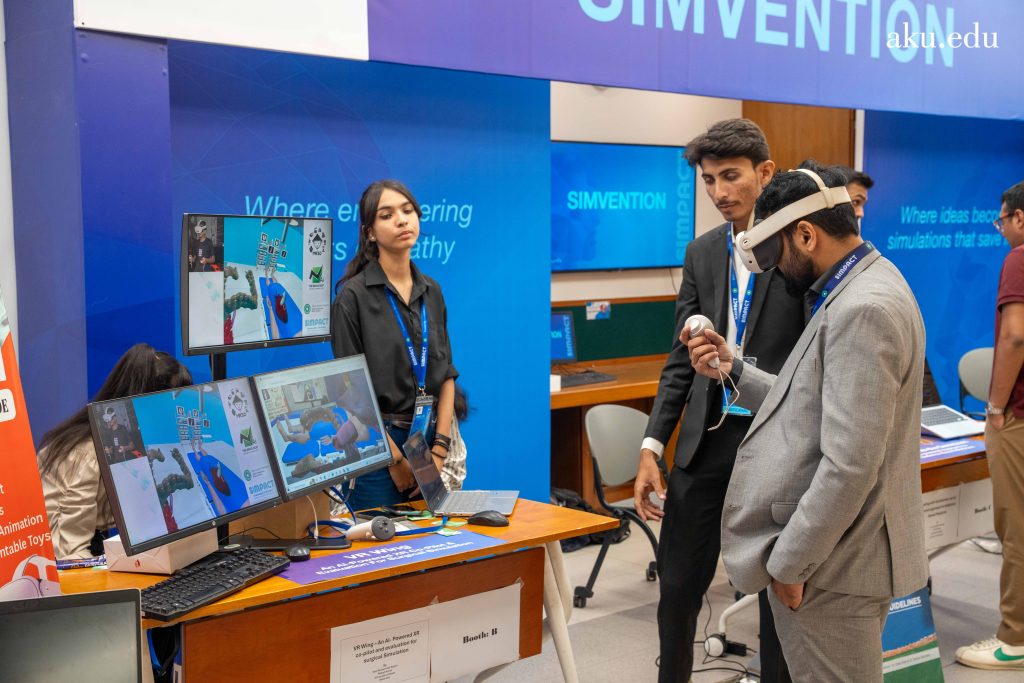
The journey began months before SIMPACT. As the simulation technology team at AKU-CIME, we envisioned SIMVENTION as a showcase capable of uncovering the region’s talent pool, bridge academia and industry, people who might not typically get the chance to present their simulation-focused work on a formal, global-facing platform.
We opened submissions across three categories:
- Healthcare Simulation Technology
- Artificial Intelligence
- Extended Reality (AR/VR/MR)
The response was remarkable. 56 projects from engineering universities, clinical innovators, independent developers, and student groups from across Pakistan were received.
The Two-Stage Shortlisting Process
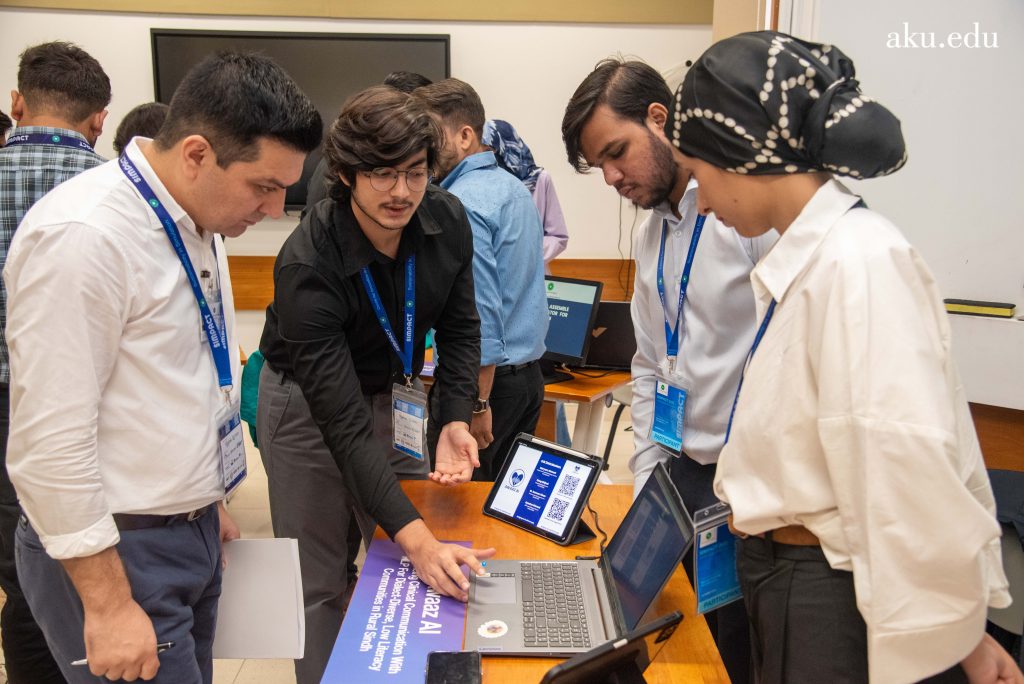
To ensure both fairness and scientific rigor, submissions were evaluated through a transparent two-stage shortlisting process designed to assess quality, relevance, and technical maturity.
In the first stage, all 56 submissions underwent an internal review conducted by the CIME Technology Team. This initial screening focused on determining whether each project was genuinely aligned with SIMVENTION’s core domains: artificial intelligence, extended reality, and healthcare simulation technologies. Projects were assessed for the clarity of their problem definition, relevance of the proposed innovation, technical soundness, overall feasibility, and potential impact on simulation-based education. This structured evaluation reduced the initial pool to 21 projects that met the required thematic and technical standards.
The second stage involved a more detailed readiness and technical assessment. Shortlisted teams were asked to provide additional information to evaluate the developmental stage of their project, ranging from early concept to prototype or near-deployment, as well as its hardware or software nature, user applicability, technical maturity, and specific relevance to simulation-based applications. This phase resulted in the selection of 12 finalists, each demonstrating a meaningful and robust contribution to the advancement of simulation technology.
An Independent, Industry-Led Jury
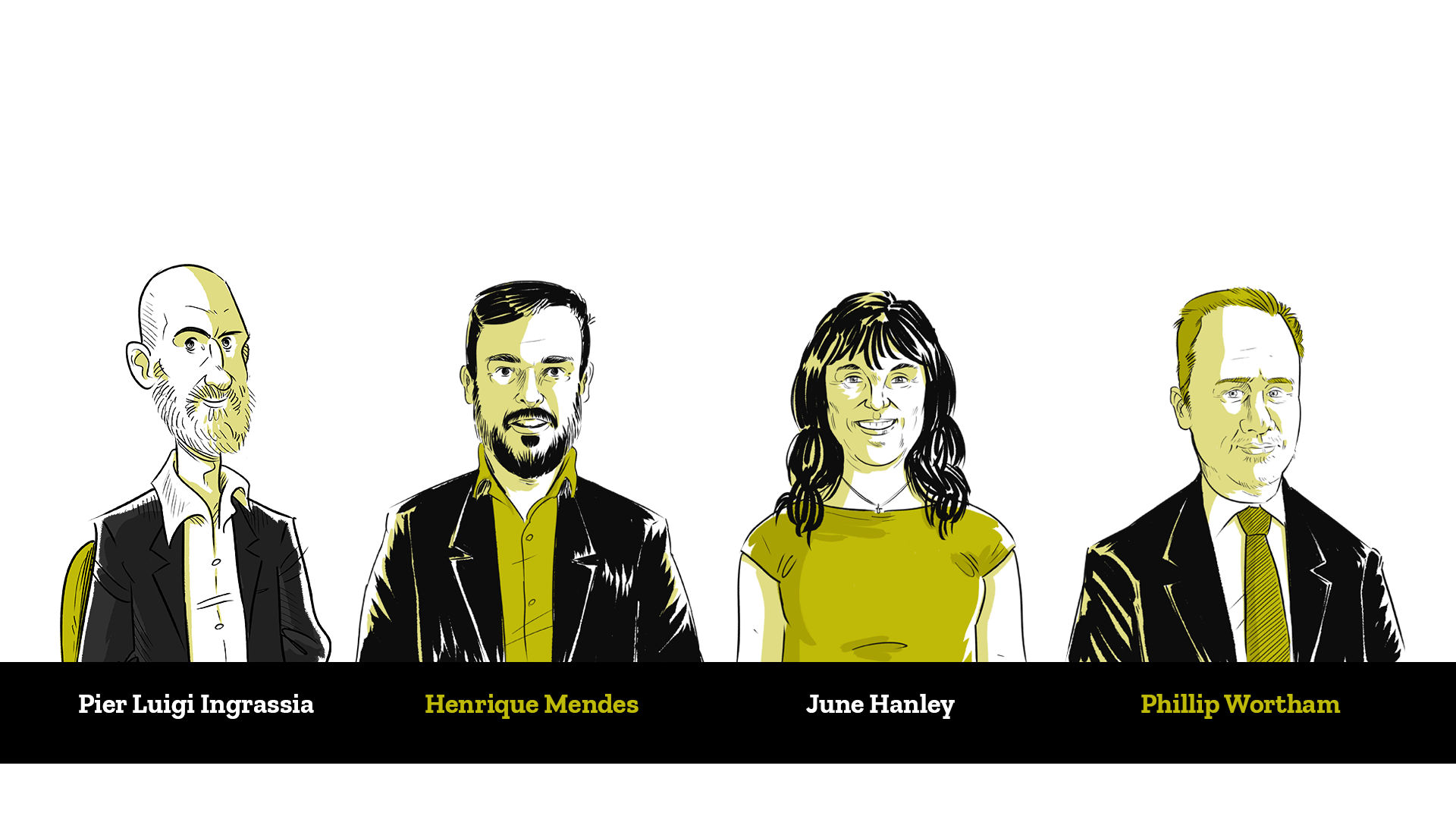
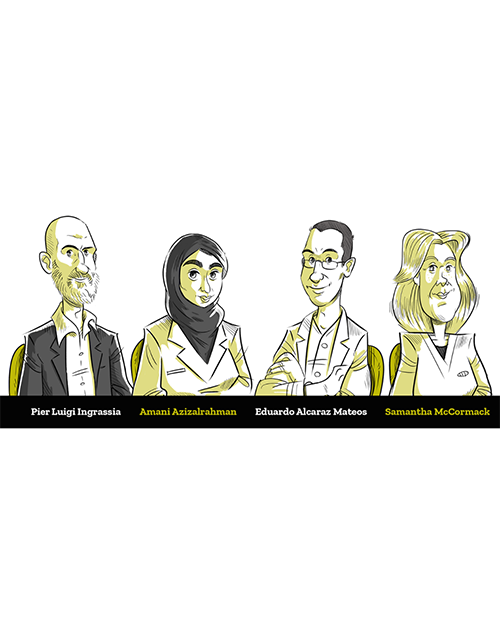
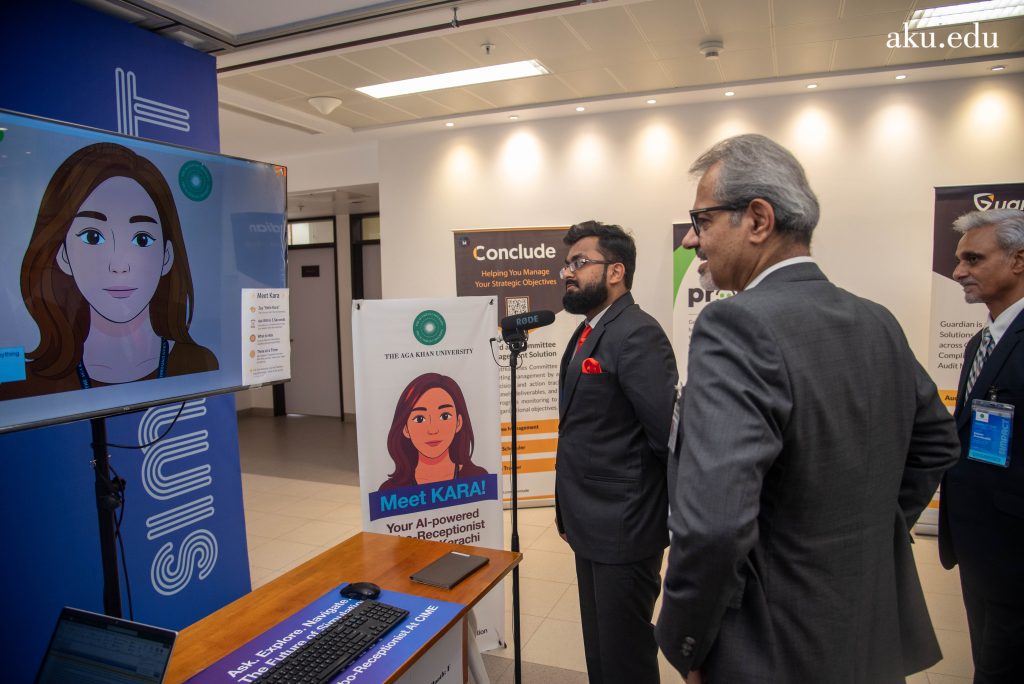
A defining element of SIMVENTION was the involvement of an independent, industry-based jury responsible for evaluating the finalists during the showcase phase. The jury comprised experts from diverse but complementary fields, including artificial intelligence, biomedical engineering, healthcare simulation, and scientific and technological innovation.
The presence of a cross-disciplinary and impartial panel ensured that all projects were assessed solely on their scientific merit, innovation value, and technical robustness, independent of institutional affiliation. For many participating teams, this represented their first opportunity to present their work to industry-level experts, marking an important step in bridging early-stage innovation with real-world technological ecosystems.
The Showcase
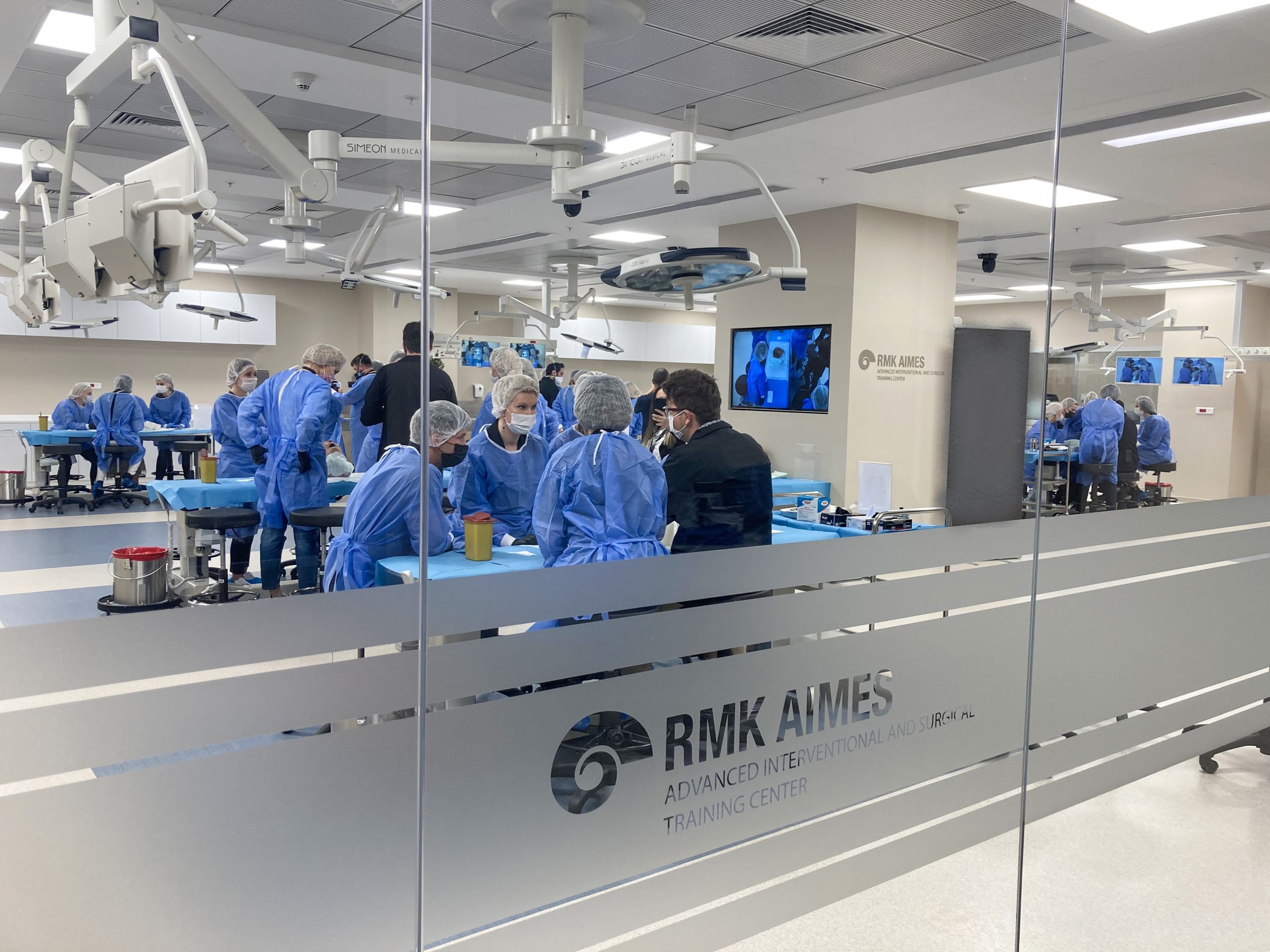
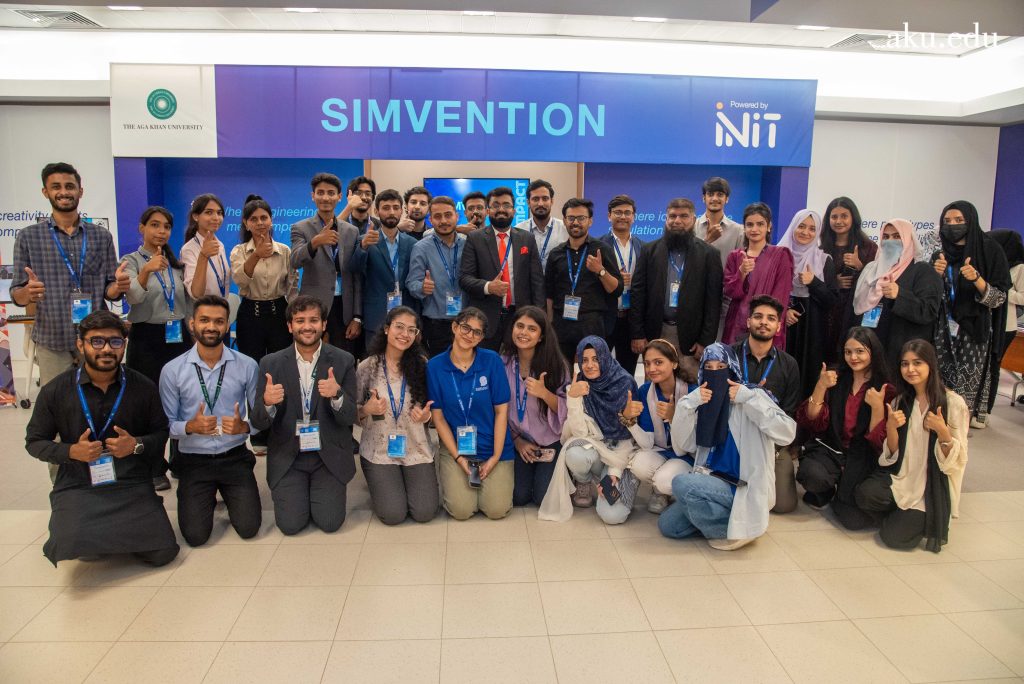
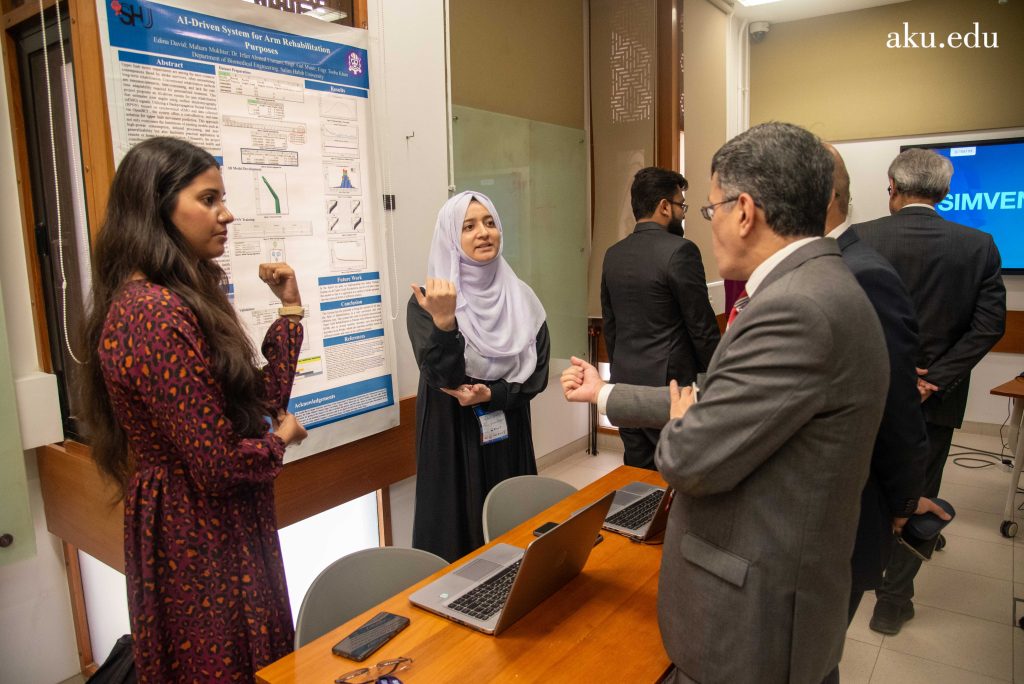
On the day of SIMVENTION, the energy in the hall was unmistakable.
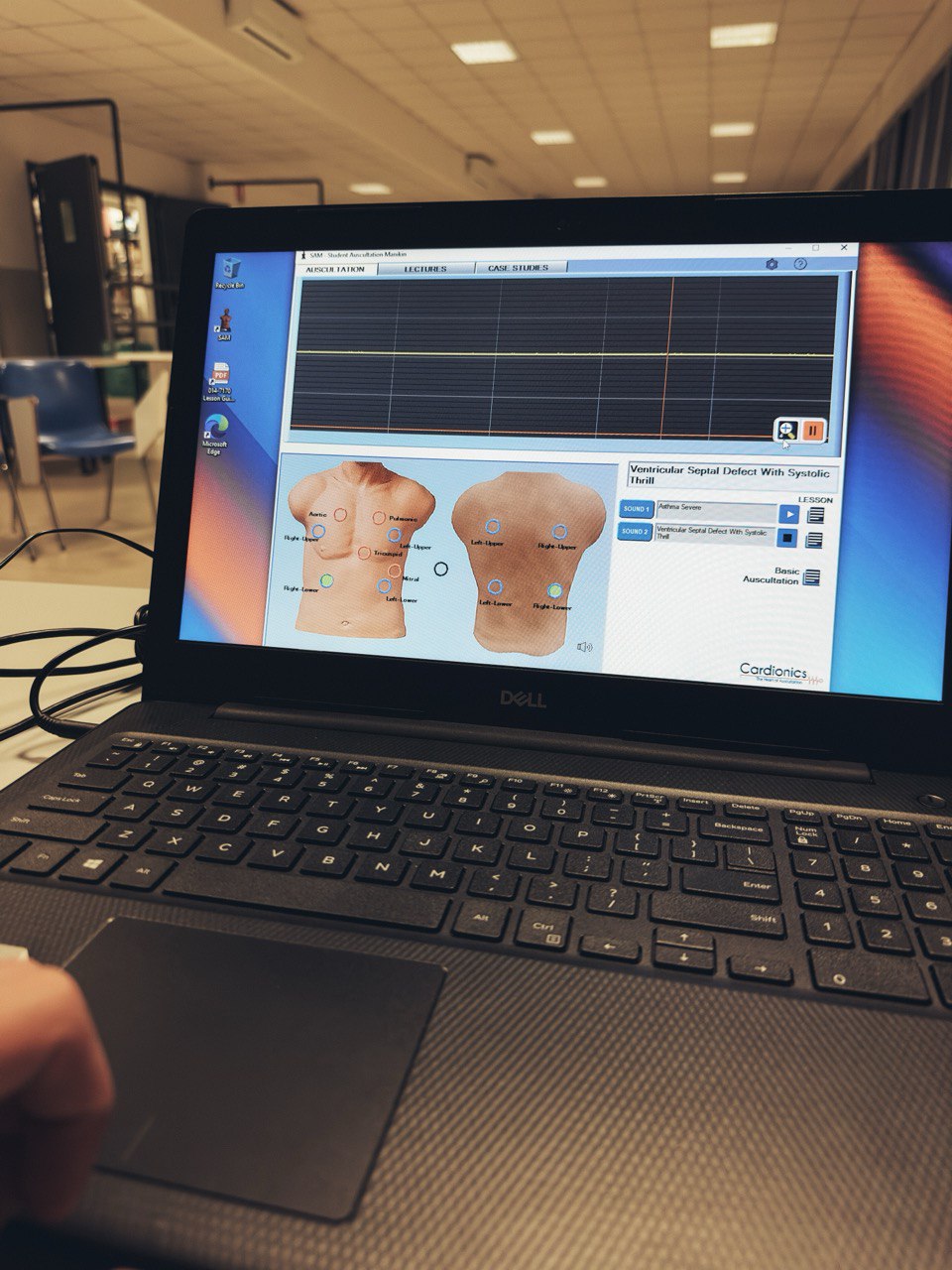
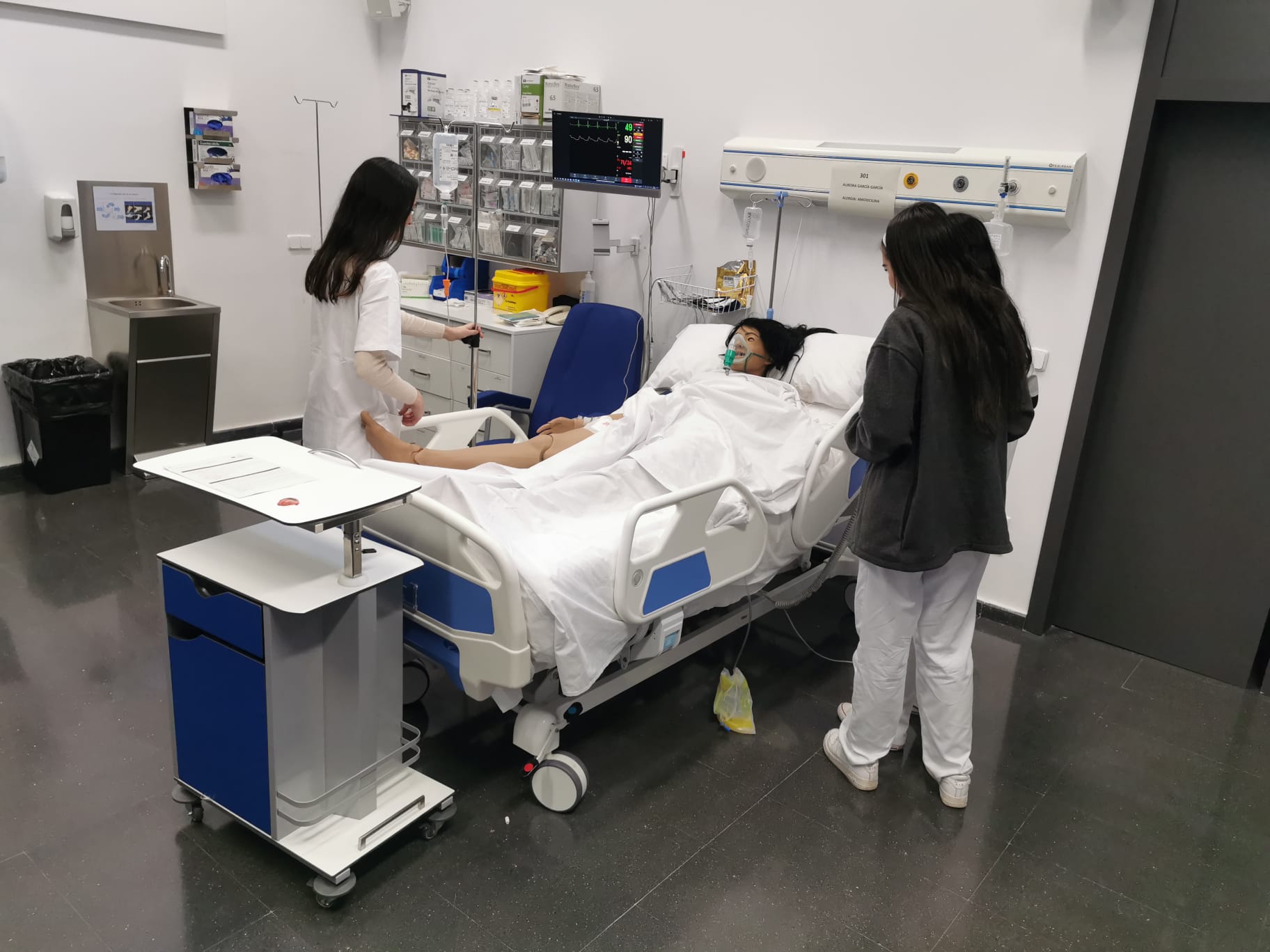
Finalists presented solutions ranging from low-cost hardware simulators to AI-driven diagnostic tools, XR-based clinical training environments, smart sensing systems, and more.
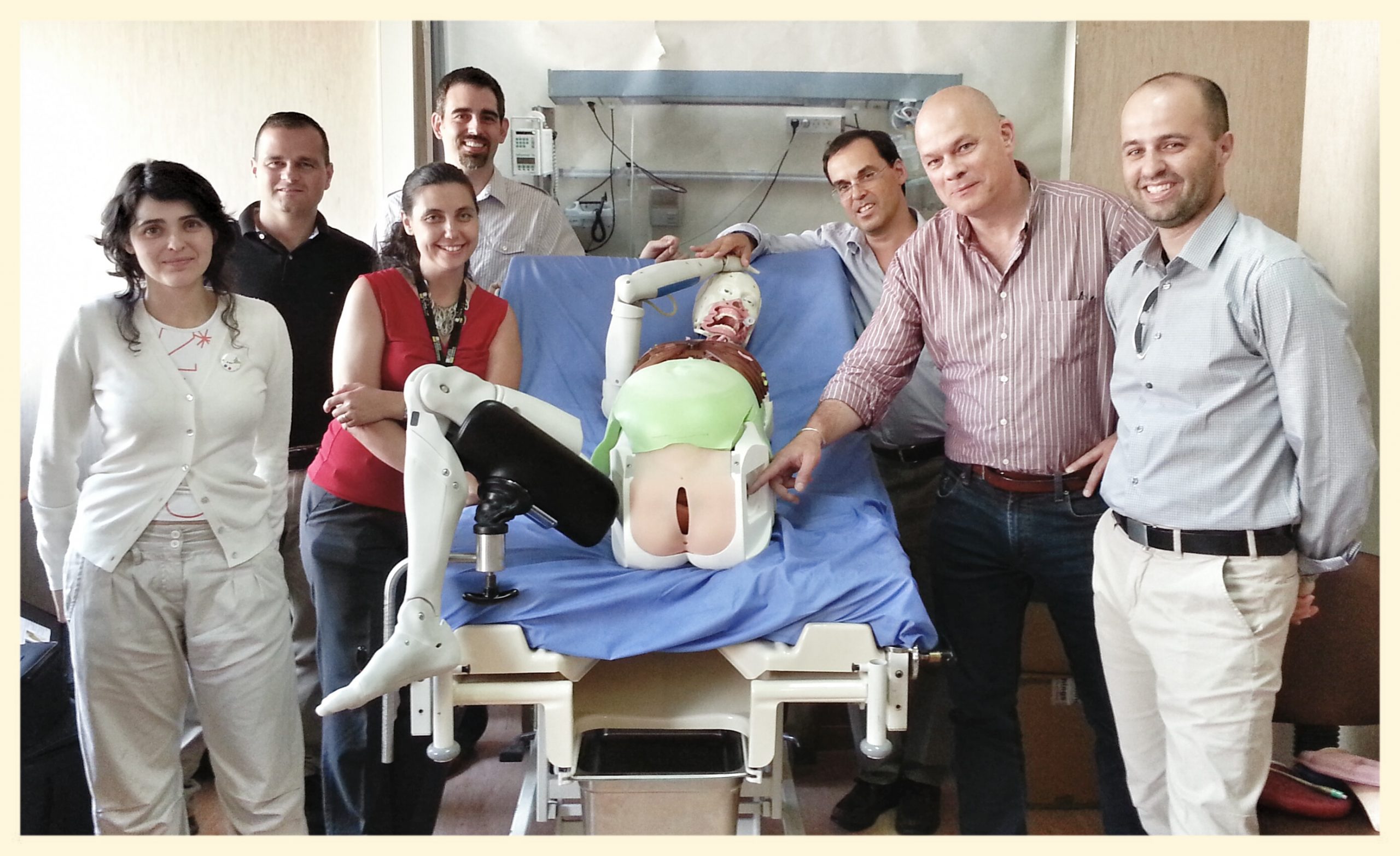
Visitors included clinicians, faculty, engineers, developers, students, investors, and international attendees, engaged deeply with the projects. Every finalist received USD 5,000 in AWS AI credits, empowering them to continue scaling and refining their technologies with enterprise-level cloud and AI tools.
Recognizing the Winners
From the 12 finalists, three projects rose to the top:
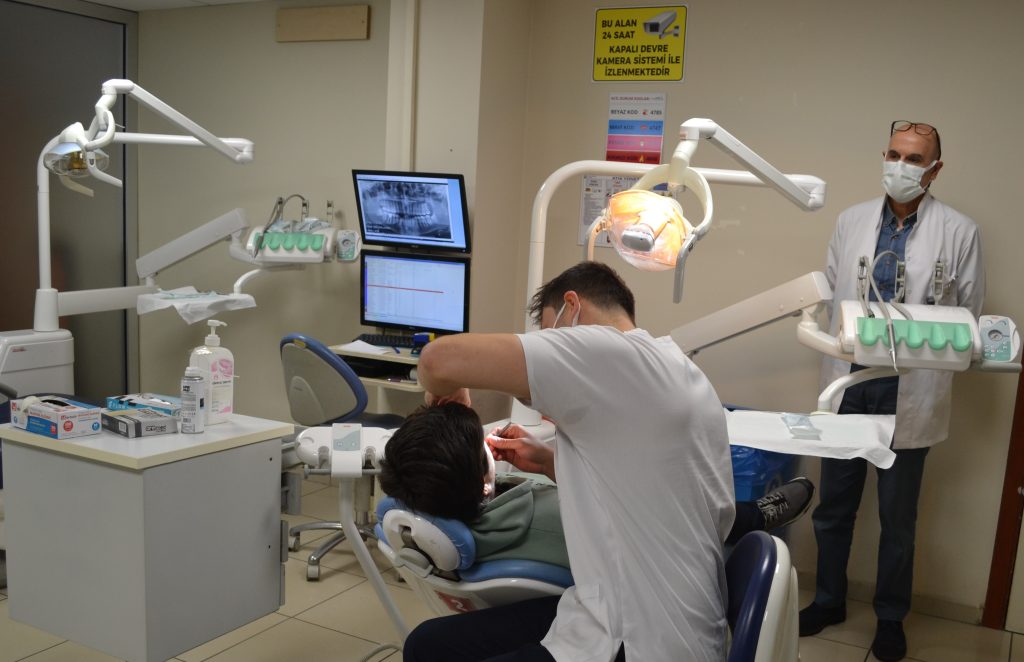
1st Place: Oral Recommendation Assistant
An AI-supported tool designed to assist with oral health recommendations, offering strong practical value with scalable clinical potential (1).
2nd Place: Smart Dose
A data-driven dosing system aimed at improving medication accuracy and patient safety through intelligent calculation models (2).
3rd Place: AI-based Oral Cancer Detection
A high-impact solution leverages AI to support early detection of oral cancer, addressing a critical clinical need with technological precision (3).
These teams earned not only recognition but also visibility, mentorship opportunities, and momentum for future collaboration.
Why SIMVENTION Matters?
SIMVENTION created something we’ve long needed in this region: a space where simulation technology is not just used, it is imagined, engineered, and built.
The impact is undeniable:
- 56 innovators entered the ecosystem
- 12 showcased at a global-standard platform
- 3 won competitive prizes
- 12 teams received AWS credits
- Multiple collaborations formed organically
- Simulation and technology communities connected like never before.
It proved one essential truth: innovation accelerates when people have a platform to create and be seen.
Looking Forward
SIMVENTION is not merely a flagship component of SIMPACT; it represents the foundation of a long-term, sustainable movement. The ecosystem established during this first edition is designed to grow over time, expanding in scope, diversity, and impact.
Early outcomes are already becoming evident, including the formation of extended collaborations, the development of emerging prototypes, ongoing mentorship engagements, and sustained dialogue between technology developers, clinicians, and simulation experts. These initial signals suggest that the initiative is beginning to generate tangible momentum beyond the event itself.
Conceived as a platform to motivate and support innovators, SIMVENTION has effectively fulfilled this role. Looking ahead, the next phase is expected to build on this foundation, further strengthening the pathway from conceptual innovation to applied simulation technology.
1. Developed by Yusra Shereen (PhD Scholar, FAST – AKHSP, Departments of Artificial Intelligence and Information Technology)
2. Developed by Dr. M. Irfan Anis (Educator and Project Supervisor, Iqra University) and Shuja Ali (Student, Iqra University), Smart Dose is
3. Developed by Sara Sharif, Mohammad Ali, Iman Ali, and Haseeb Saeed (Students, Sheikh Zayed Medical College, Rahim Yar Khan; interdisciplinary focus across Medicine, Engineering, and Artificial Intelligence)
READ ALSO