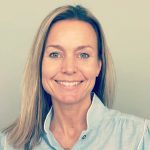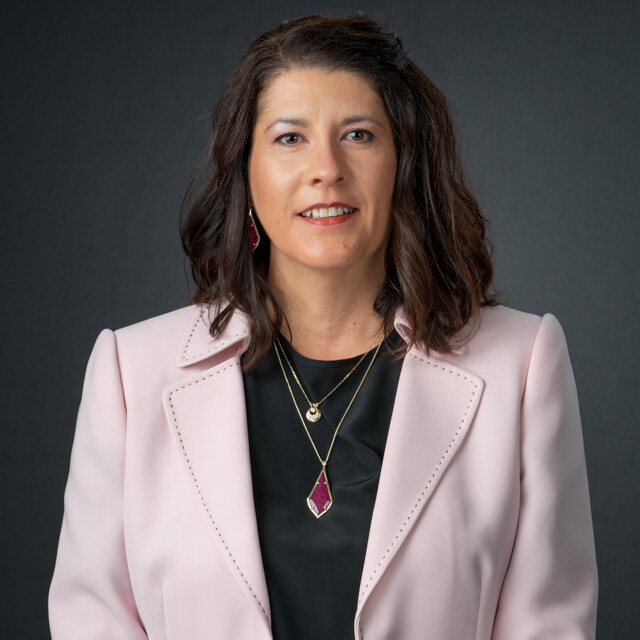















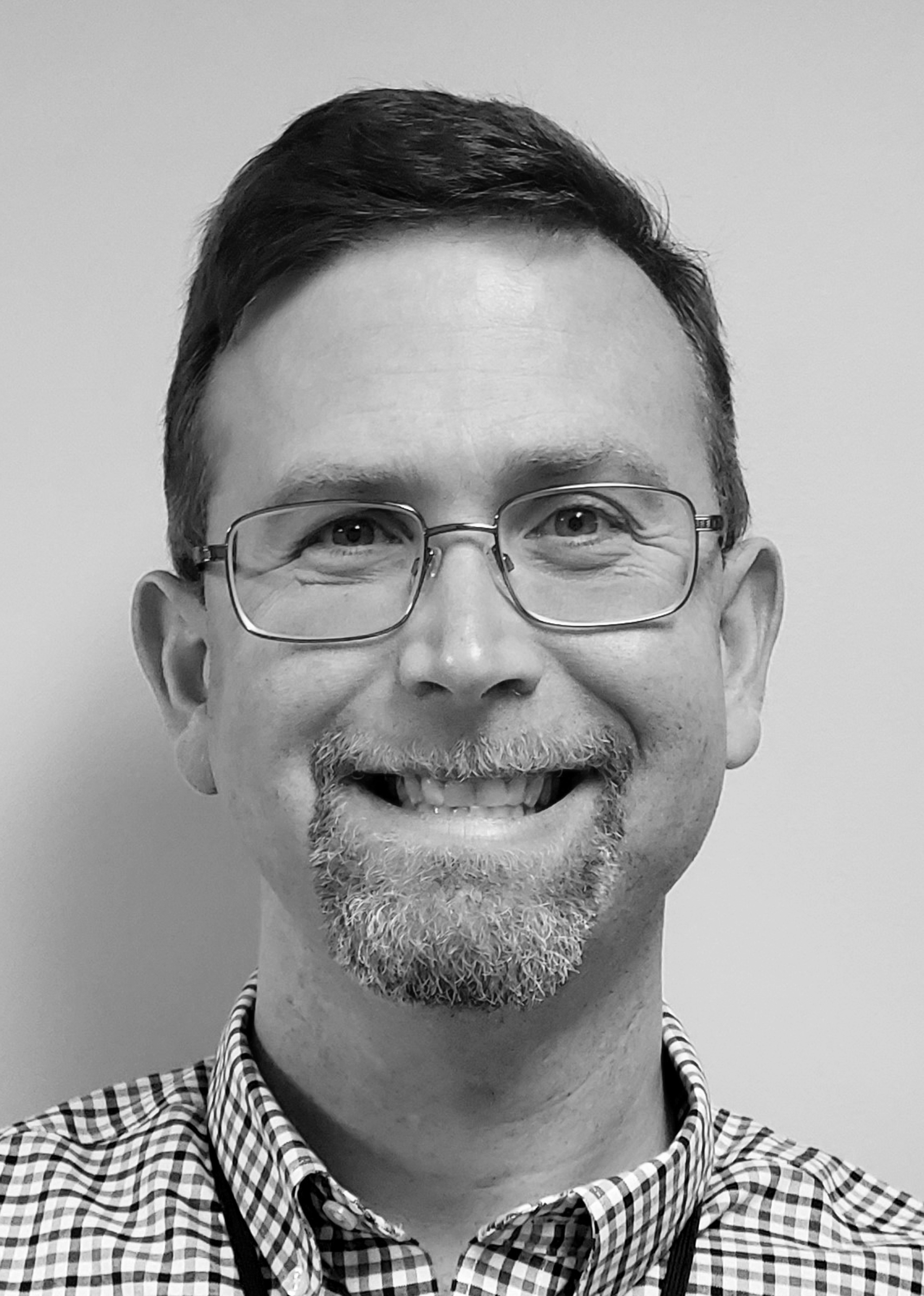
What happens when pediatric critical care medicine meets simulation science and systems thinking? Aaron W. Calhoun, MD, FAAP, has explored this question throughout his career. A clinician, educator, researcher, and leader in simulation, he has helped position simulation as a practical tool for improving patient safety and healthcare processes. Once drawn to astrophysics and high-energy physics, still an avid reader of sci-fi, fantasy, science, philosophy, and theology, he will be president of the SSH in 2026. In this SIM Face interview, he reflects on his journey and shares his insights on where simulation is headed.
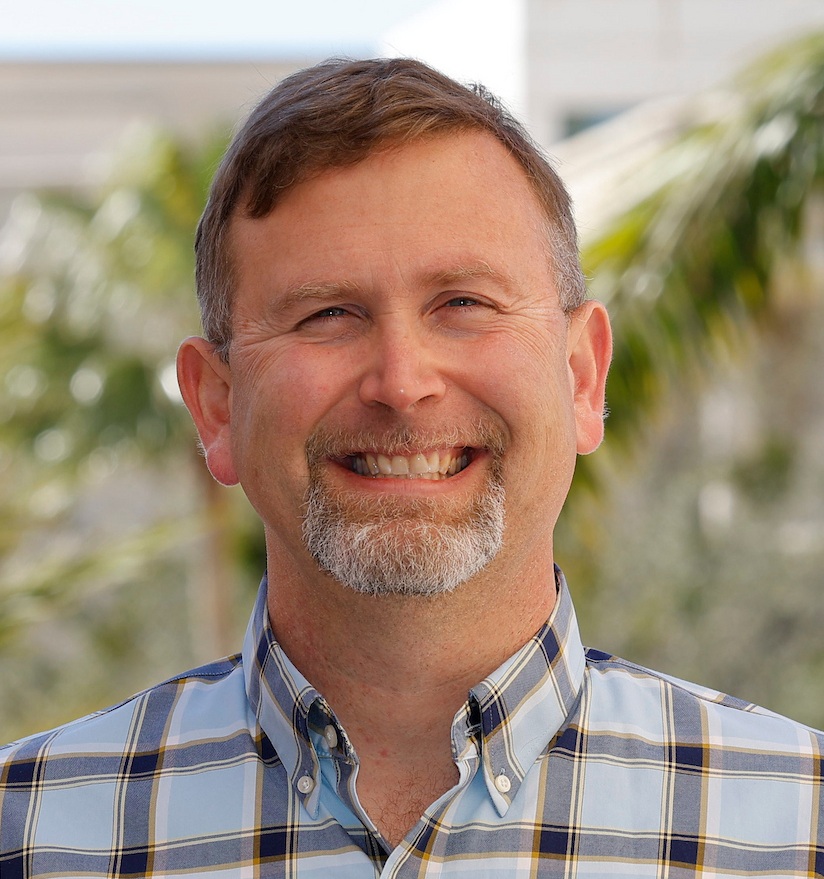
Aaron Calhoun
MD, FAAP, Pediatric Pediatric Critical Care Medicine
Welcome to SIM Face, Aaron, and thank you for joining us. In this column, we highlight the individuals who are promoting a culture of patient safety through simulation across disciplines and systems. Your career integrates clinical practice, academic leadership, and simulation science. How did simulation become a central component of your professional path?
Its an interesting story really. During my initial training simulation had not yet really caught on as an educational methodology, but then I entered my critical care fellowship, was exposed to it for the first time, and was immediately fascinated. I have been a life-long gamer ever since the original Nintendo Entertainment System came out when I was a child. After my first simulation experience something just clicked, and I realized that I could integrate that side of my life with my career. In terms of my research career, I have never been one to be satisfied with what is already known, and I realized immediately that if I was going to engage in this field I wanted to be actively involved with exploring and developing the knowledge base we would need for it to grow.
Simulation leaders often operate behind the scenes. What part of your work do you find most rewarding?
From an educational standpoint, I gain a great sense of satisfaction from watching a learner’s face as they comprehend something they did not before. Unlike traditional teaching methodologies, a well-constructed simulation and debriefing gives the learner a chance to discover the learning points for themselves rather than simply accepting them as they are handed on by another. There is a 1975 essay by Walker Percy called the Loss of the Creature that describes beautifully the difference between learning as giving knowledge to the learner versus learning as allowing the learner to discover new knowledge for themselves. It has guided my understanding ever since. I think simulation is an excellent method for providing participants a way to discover new things for themselves.
From a research perspective, it is much the same. My involvement in research these days is more as an itinerant methodologist than as a primary investigator. Most of my time is spent meeting with new scholars who are attempting to find the best ways of investigating a question of interest and assisting them in figuring out how to do it in the most robust way possible. Seeing a young researcher that I consulted with get published for the first time is incredibly rewarding.
What does Aaron do when he’s not working?
I love spending time with my family. My wife Jamie and I have three children. The oldest is in College in Belfast, and my middle and youngest are both in high school. They all have such varied interests, and it is fun to watch as they explore new things.
Recreationally, I am fairly eclectic in my interests. I still game a reasonable amount (I like story-driven games where you get to save the world, it fits in with my intensive care persona). I also learned to code during COVID, and write indie games on the side. I read a great deal, typically Sci-fi, Fantasy, Science, Philosophy, or Theology. I am also active in our local parish church.

In recent years, you have held leadership positions in the INSPIRE Pediatric Simulation Research collaborative and the Society for Simulation in Healthcare (SSH). Why have you invested so much of your personal and professional time in these activities?
Most of those roles are the fruit of my interest in and engagement with simulation research. When I began my academic career the field was largely in its infancy. There were few mentoring opportunities so I largely had to figure out the way forward on my own. During that phase of my life IMSH was one of the few opportunities I had to connect with the larger community of simulation scholars. As my career progressed and new generations of scholars entered the field I realized how important communities like IMSH were to both individual growth and the advancement of the science as a whole, and so I decided to engage as much as I could with the organization in order to ensure that those spaces continued to exist. That engagement lead me through the SSH Research Committee and INSPIRE to the SSH Board of Directors and eventually the presidency. My overall motive, though, has not changed. In the end, I want to ensure communities of practice like those that I grew up in continue to exist and flourish.
As you just said, in 2026, you will assume the role of President of the SSH. What does this result mean to you?
To me, this role is fundamentally about service to the field. Metaphorically, I tend to look at roles like this a little like the membrane of a cell. My job is not to be at the center of the activity, but to maintain the integrity of the overall structure so that the real activity of the society, the networking, projects, career development, and education, can continue unimpeded inside. It is also a great honor, and I am acutely aware of the stature of those who have gone before. It is my hope that I can make a contribution to the growth of our field that worthily builds upon their contributions. Over the next year I have a chance to strengthen the organization and the field if only a little, and I intend to do my best to accomplish this.
What priorities do you see as most important for SSH in the coming years?
Our world, and global health care more specifically, seems more fragmented now than it was even a decade ago. As the largest society focused on healthcare simulation, I believe SSH has a significant part to play in overcoming these barriers for the good of the worldwide simulation community. Practically, this means deliberately moving toward a collaborative vision in which simulationists from around the globe can work together to solve problems of global importance, synthesize the existing data in new and creative ways, and break down barriers between professions and geographic regions. Expansion of our global engagement in a non-competitive manner, as a citizen of the “simulation world”, will be needed to navigate the particular pattern of threats to healthcare and patient safety that define our time.
Recently, SSH and SESAM announced a strategic partnership. What is the significance of this collaboration for the global simulation community?
This collaboration represents a key move toward that vision of global collaboration that I have just been discussing. SSH and SESAM, while based in particular geographic areas, have significant global reach and resources, and so it only makes sense for our two organizations to forge ahead together in this area. That being said, while collaborations such as this typically depend on a small number of initial founders at first we are interested in rapidly leveling the playing field globally in the quickest and most inclusive way possible. I truly believe that the SSH-SESAM Strategic Partnership is only the first step toward increasing the ability of the global simulation community work together both efficiently and inclusively.
Last year SIMZINE talked about the International Simulation Data Registry (ISDR). But we would like to hear from you, founding member of the ISDRS, what exactly it is and why it is important.
The ISDR has actually been around for quite some time. It was initially based on the work of Matt Kurrek, a Canadian Anesthesiologist who had a clear vision of the good that could be accomplished by correlating similar data from simulation and real-world events. The initial registry focused primarily on cardiac arrest simulations, as these had clear definitions that could be correlated with American Heart Association data, and had a fairly successful pilot phase that was cut short by COVID. Since then we have been updating the data entry system and expanding the types of case data it can accommodate, and it is ready for a “2.0” launch. I think registries such as this are vital as they allow us to collect and analyze the data that each of us generates during the course of our normal educational and patient safety activities in systematic ways that can benefit the community as a whole, both in terms of answering key research questions and in benchmarking individual programmatic performance. As the ISDR 2.0 continues to develop I would encourage all members of the simulation community to contribute.
Looking ahead, what skills will you want to develop to offer consistently high-quality and innovative simulations?
I think, first and foremost, that it is vital for simulation leaders to continue to conduct simulations themselves even as their administrative responsibilities increase. I often find, in this and in other leadership roles, that as organizational responsibilities increase it is easy to allow others to take on the actual teaching. But without that touchstone we can often become detached from the work as it is done, which in turn impacts our decisions. So right now I am trying to learn the art of ongoing presence and engagement within the heart of simulation practice even as my responsibilities change. Beyond this, I think it is vital to stay up to date on new theories, educational approaches, and technologies to make sure that our teaching stays current and is not simply dependent on how things were done a decade ago. Conferences such as IMSH and SESAM provide excellent ways to make sure that we are continually engaging with best practices.

If simulation had not entered your life, what do you think you would be doing today, and would patient safety be missing out?
Interestingly enough, I would probably have been an astrophysicist or a high energy physicist. As is apparent from my external activities, I have a pretty broad array of interests that I try to stay engaged in, and there was a time in medical school when I seriously considered whether I should shift careers and get a PhD in Physics. In the end I decided to continue in medicine, and am glad that I did, as I would never have encountered healthcare simulation and the healthcare simulation community, had I left.
We typically conclude our interviews with a thought-provoking question or reflection: suggest the next simulationist to be interviewed in this column and tell us why you chose him/her.
While there are many simulationists that would make fascinating interviewees, my suggestion would be to interview Dr. Mark Adler, MD, FSSH, from Northwestern University. Mark and I have known each other since medical school, and over his career he has made substantial foundational contributions to simulation practice, particularly in the areas of assessment and validity. He has also been with simulation since nearly the beginning and has valuable perspectives to contribute on the growth of SSH, INSPIRE, and the overall development of the field. I think the readers of SIMZINE would learn a great deal from him.
Thank you, Aaron, for taking the time to speak with us and for sharing your insights. We hope this conversation offers our readers both reflection and inspiration as they continue their work in simulation and patient safety.
READ ALSO