












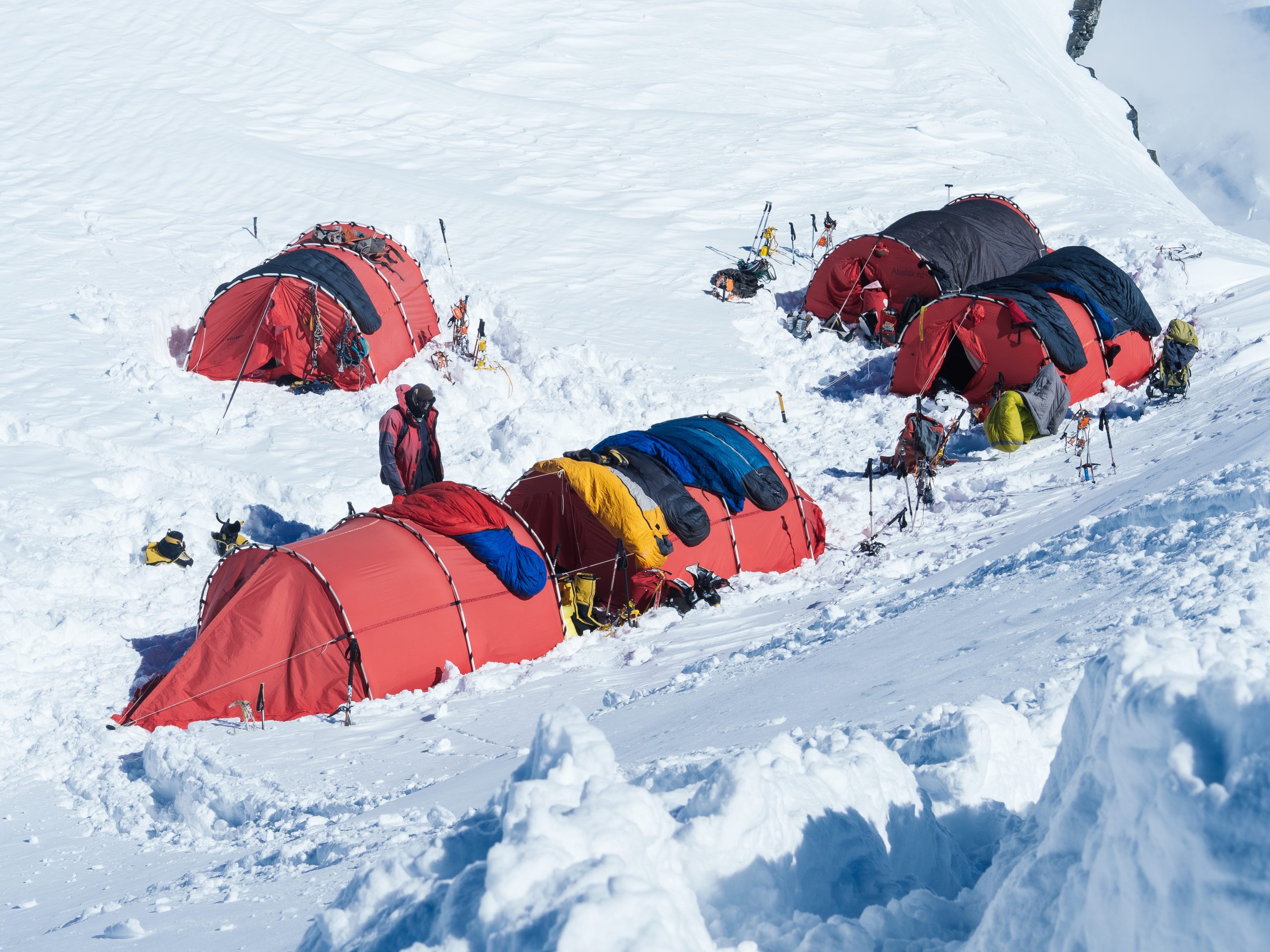
This article explores how non-healthcare simulations, including online missions, live re-enactments, and virtual-production scenarios inspired by Everest climbs, can enhance team training for healthcare professionals, by strengthening leadership, communication and decision-making under pressure.
Exclusive partnership with
Simulation training is used to teach healthcare professionals and leaders in team dynamics, leadership, and communication. This article focuses on using a non-healthcare simulation, a climbing expedition on Mt. Everest, to optimize learning of these important concepts.
Using non-healthcare simulations takes learners out of their traditional roles and immerses them in roles they are less familiar with, allowing many learners to participate in the simulation with similar knowledge and skills. Using crisis situations outside of healthcare can provide an authentic experience when it is based on actual situations (Beaudry, 2021).
We will review three different ways in which crisis situations involving Everest climbing expeditions can be used to teach teamwork and leadership.
Online Everest Simulation
The first involves using an online simulation by Harvard Business Publishing called, Leadership and Team Simulations Everest V3, written by Roberto and Edmondson. This simulation puts students into five person teams and roles and simulates a climb that unfolds over 6 simulated days, in a summit attempt. Along the way there are challenges and decisions to make. Learning outcomes of the simulation include understanding concepts in team dynamics, how leaders impact team decisions, and how cognitive bias impacts decision making. This experience can be done in a classroom setting in teams, with each person using their own computer to play a role. The simulation is well received by learners, including nursing students at all levels.
In-Person Everest Re-enactment
A second Everest type simulation is a large scale in-person event developed by Peter Dieckmann, combining storytelling and a re-enactment of a Mt. Everest expedition, to practice cognitive and social skills, and develop a deep understanding of team dynamics and leadership (Dieckmann et al., 2024). This simulation highlights the benefits of out-of-context simulations that remove participants from their clinical environments, allowing them to focus on skill development without the influence of typical power structures and routines. By changing the communications and teamwork context to something unfamiliar, like mountain climbing, participants can freely engage with the learning objectives without preconceived notions. The process involves storytelling to set the scene, assignment of roles to mimic a real expedition team, and strategic use of props and environments to simulate the challenges of a mountain climb.
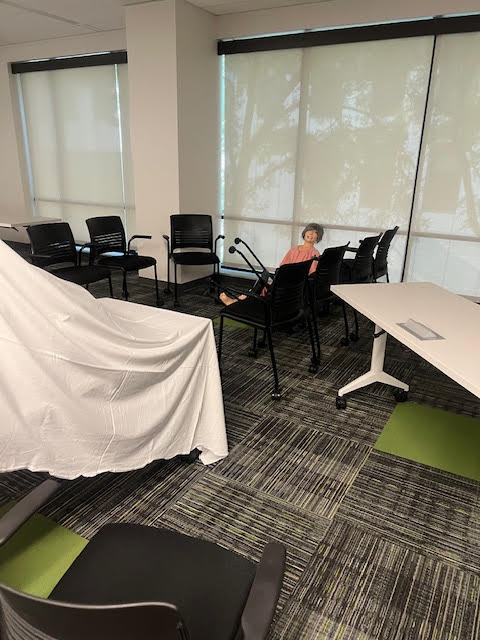
Most participants find it valuable, though some may not engage fully. The reflection and debriefing phases are crucial, as they help participants connect their experiences from the simulation to their professional roles in healthcare settings. This concept blends narrative storytelling with physical reenactment to provide an immersive learning experience that promotes interpersonal skills, critical to effective healthcare delivery. The article, published in Clinical Simulation in Nursing, includes all the instructions to run the scenario.
Everest VPS Scenario
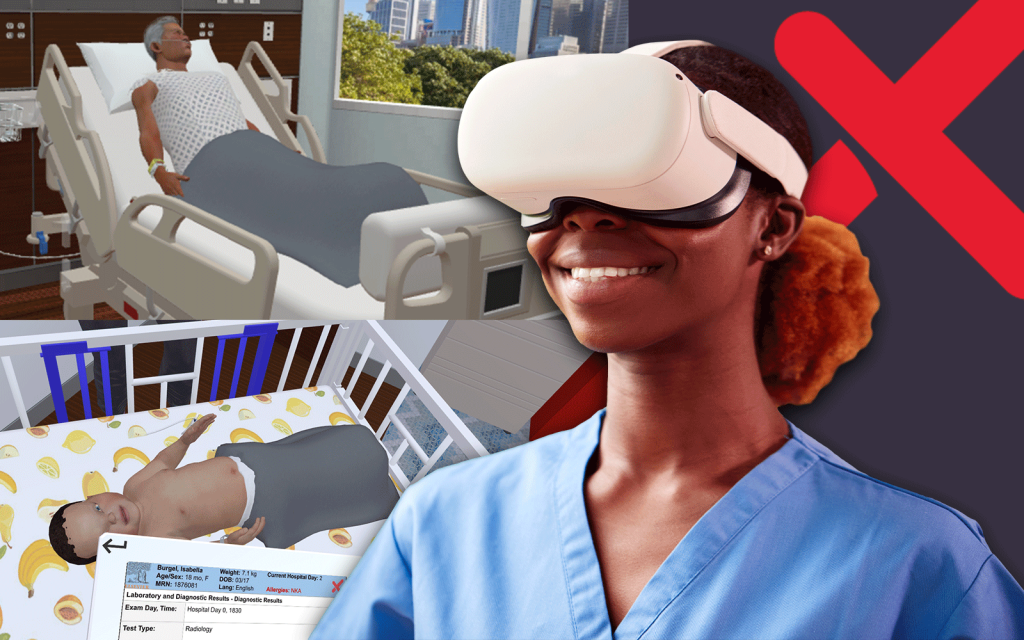
The third Everest simulation uses a branching case scenario to allow for both a single and multiplayer online version, filmed on a Virtual Production Stage (VPS). The VPS combined a virtual reality background and live action filming on a stage.
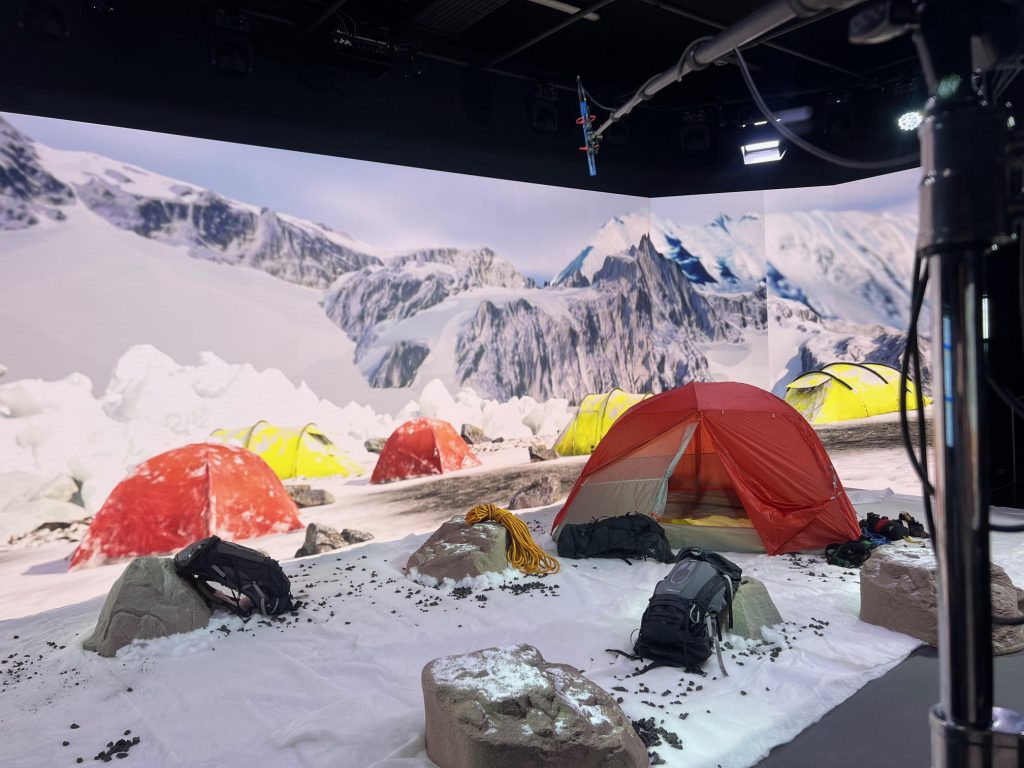
This simulation takes a learner through a climb using video clips and decision points, to create the experience. The scenario was created as part of a Massive Open Online Course developed through the University of Michigan’s Center for Academic Innovation on Leadership for Healthcare Professionals (Arbaugh M). The experience was created through the eyes of a team member on an Everest expedition to demonstrate teamwork and leadership challenges and decisions. A full on-line debrief at the end allows learners to reflect on their experiences and to integrate key learning outcomes. The use of a VPS creates an immersive simulation allowing learners to experience the extreme challenges of an Everest climb.
These simulations demonstrate the educational value of using non-traditional, crisis-based scenarios to enhance teamwork and leadership skills that can be translated back to healthcare settings. The Healthcare Simulation Standards of Best Practice® were used to design and implement these simulations, including a pre-briefing and a reflective debriefing.
References
Beaudry, S. (2021). Expansion of Summiting Mount Everest for Classroom and Online Delivery; An Experiential Learning Application for Organizational Behavior. Developments in Business Simulation and Experiential Learning: Proceedings of the Annual ABSEL conference.
Dieckmann, P., et al. (2024). Combining storytelling and a scenario re-enactment of Mt. Everest expeditions to practice cognitive and social skills. Clinical Simulation in Nursing 96: 101591.
Arbaugh M. Open Online Series Uses XR Technology to Take Healthcare Learners to the Top. https://online.umich.edu/content/learning-for-healthcare-professionals/
READ ALSO