















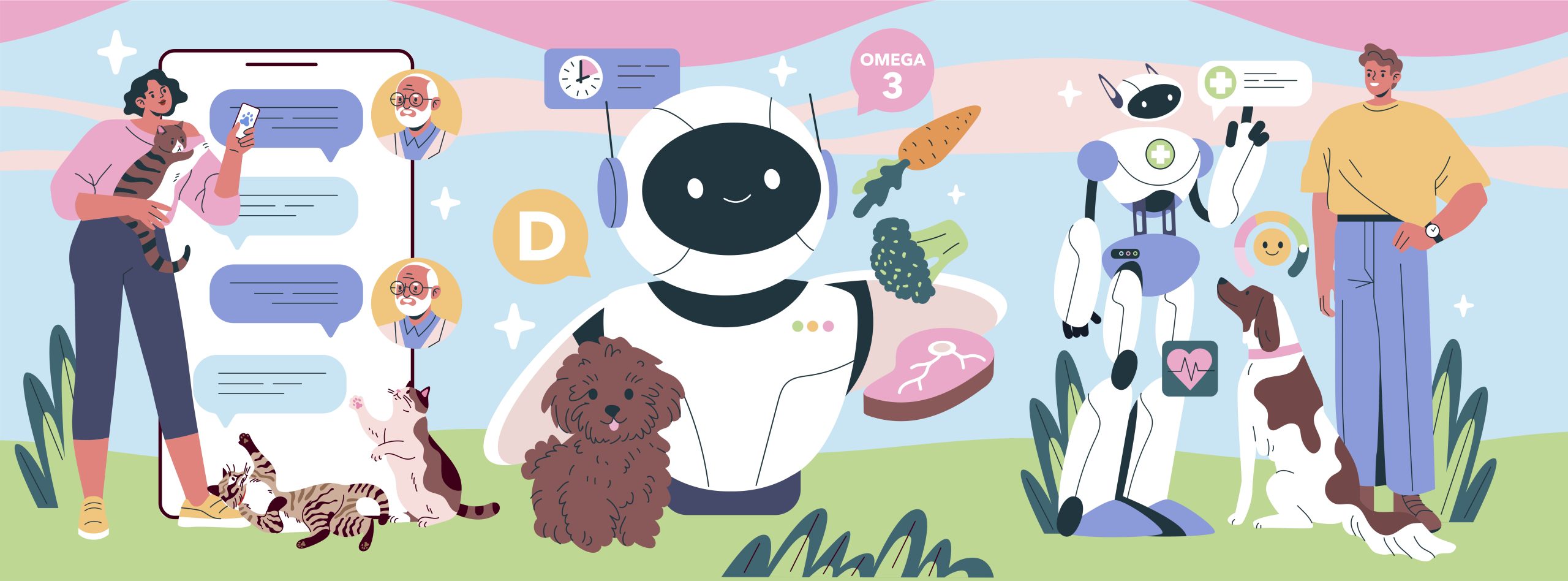
The “Andrés” chatbot, developed by the Veterinary Simulation Center at Santo Tomás University, ushers in a new era of veterinary simulation by allowing students to practice clinical anamnesis autonomously, repetitively, and without pressure. This tool converses like a real tutor, offering emotional and clinical context, which improves the structure of questions and professional communication. Its use demonstrates high student engagement, good usability, and significant potential for scaling new clinical cases.
Introduction
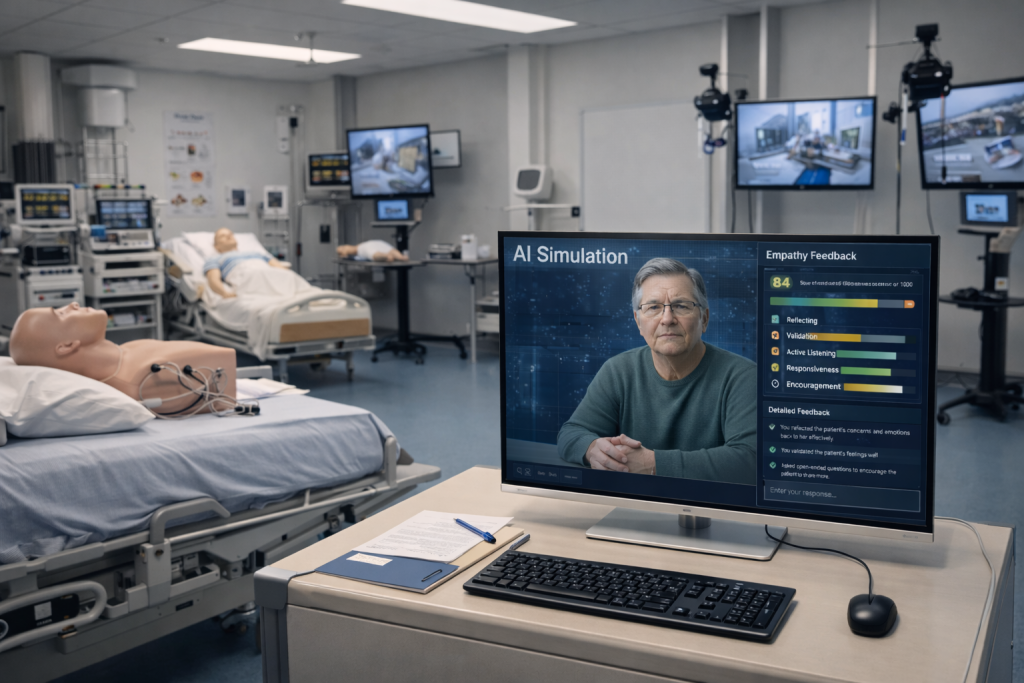
In the dynamic field of veterinary education, clinical simulation has emerged as an essential tool for the development of practical and communication skills. However, traditional simulation models face significant challenges: high operating costs, time and human resource constraints, and limited possibilities for autonomous repetition. In this context, the Veterinary Simulation Center at Santo Tomás University represents a notable pedagogical innovation: the implementation of a chatbot tutor, “Andrés,” developed in Microsoft Copilot Studio®, as an asynchronous training resource in clinical anamnesis.
The Problem: Clinical Communication in Crisis
During high-fidelity simulation activities, worrying patterns were detected among veterinary medicine students: difficulties in initiating clinical interviews, disorganization in question formulation, and a noticeable inability to establish rapport with simulated tutors. These shortcomings not only compromise the quality of the anamnesis, but also affect the veterinarian-tutor relationship, a critical component in professional practice.
The Solution: A Chatbot with a Name and Personality
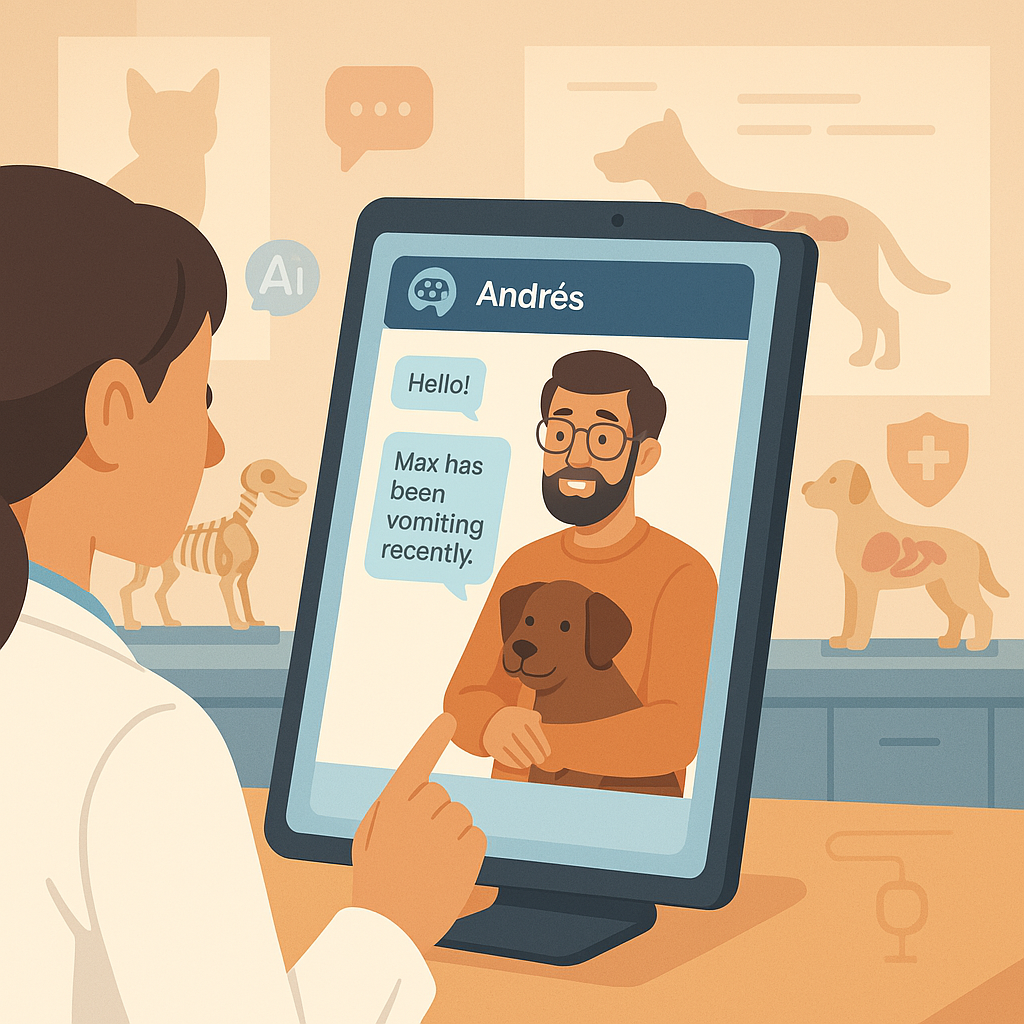
Faced with this scenario, a conversational chatbot prototype called “Andrés” was designed, programmed to simulate a guardian concerned about the health of his dog Max, who presents with ascites. The development was carried out in Microsoft Copilot Studio®, a platform that allows the creation of conversational flows with conditional logic, integrating reference documents to provide the chatbot with contextualized clinical knowledge.
The design of “Andrés” was not merely technical: he was given a coherent personality, capable of responding naturally, expressing moderate emotions, and adapting to the student’s questions. This humanization of the chatbot was key to creating an immersive and realistic experience, replicating the emotional complexity of an authentic veterinary consultation.
Methodology and Evaluation
The methodological approach adopted was agile. Action research, rapid prototyping, and mixed evaluation strategies were combined. Validation was performed using an adapted version of the System Usability Scale (SUS), supplemented with specific items for veterinary training. In addition, qualitative comments from students were analyzed and usage patterns were observed.
Results: Beyond Usability
The result of the implementation of the first prototype was promising. Seventy-two percent of students (12 out of 16) used the chatbot voluntarily, and more than half repeated the practice at least three times. In terms of perception, an average score of 4.2/5 was obtained for the improvement of the clinical question structure, and 4.0/5 for clinical relevance. These data suggest that “Andrés” was not only well received but also had a positive impact on the development of communication skills.
However, not everything was perfect. Twenty-five percent of users reported technical failures, mainly related to failed access, and 44% requested the addition of more clinical cases. These observations reveal both the potential and the current limitations of the system and guide future improvements.
Future Institutional and Academic Impact
The impact is twofold. At the institutional level, it generates a scalable, low-cost, and highly available tool that effectively complements physical simulations. At the academic level, it creates a replicable protocol for the development of educational artificial intelligence (AI), with clear metrics that are applicable in other educational contexts.
In addition, the importance of integrating these tools with institutional LMS platforms to avoid access barriers and of training faculty in the use of emerging technologies was evident. AI, in this case, does not replace the teacher or face-to-face simulation, but acts as a “pressure-free rehearsal,” where error becomes a learning opportunity.
Reflections on the Software: Microsoft Copilot Studio
The use of Microsoft Copilot Studio® was decisive for the success of the project. This platform allowed for the design of a complex conversational flow without the need for advanced programming, facilitating the creation of conditional responses, integration of clinical documents, and analysis of interactions. Its user-friendly interface and adaptability make it an ideal tool for educational institutions seeking to innovate without relying exclusively on external developers.
However, the experience also revealed areas for improvement: technical stability must be prioritized, especially when working with students who access the system from multiple devices and networks. Likewise, the possibility of scaling the system to multiple clinical cases requires careful content management and rigorous pedagogical validation.
Lessons Learned and Recommendations
Among the main lessons learned from the project are:
- AI is a complement, not a substitute. Its value lies in enabling autonomous, repeatable, and non-judgmental practice, ideal for students who need to reinforce specific skills.
- Personalization matters. Giving the chatbot a consistent and realistic personality improves student immersion and engagement.
- Feedback is key. The system must offer responses that guide, correct, and reinforce learning, not just simulate a conversation.
- The technology must be reliable. A chatbot that fails in access or response logic can lead to frustration and demotivation.
- Case diversity is essential. Students demand variety: from dogs and cats to reptiles and exotic animals.
Conclusion: A Promising Future for Veterinary Clinical Simulation
The development of the “Andrés” chatbot marks a milestone in the integration of artificial intelligence into veterinary training. Its implementation demonstrated that it is possible to create accessible, effective, and scalable clinical simulation experiences using available technological tools and a student-centered pedagogical approach.
This project not only solved a specific clinical communication problem, but also opened the door to new forms of teaching, where technology becomes an ally of meaningful learning. In a world where education must adapt to diverse rhythms and styles, initiatives like this remind us that innovation does not always require large budgets, but rather great ideas, teaching commitment, and an open view of the future.
READ ALSO