








A fortnightly podcast from the University of East Anglia offers educators and clinicians an informal way to follow how simulation is changing in universities and healthcare services.
Scientific articles remain the main record of what works in healthcare education. They are also written for specialists and require sustained attention that clinical and teaching schedules rarely allow, and not every professional wishes to follow a field through academic papers alone. Here at SIMZINE, we’ve made it our mantra, it’s the reason we exist!
Moreover, simulation is a practice-based discipline in which clinicians, nurse educators, engineers and managers work side by side, which makes it a natural candidate for formats that translate research and experience into plain spoken language. Podcasts are one such format, and healthcare simulation, the use of realistic scenarios, manikins or virtual environments to train and assess clinical skills, now has several of them. We’ve already described them in a previous article. Today we want to tell you about SimCast.
Why Podcasts?
Podcasts have been studied as learning tools for about a decade. A review by Cho, Cosimini and colleagues, published in 2017, analysed 84 articles. It concluded that podcasts are feasible and accepted by learners, while noting that evidence of their efficacy was limited. A later scoping review, based on a literature search in 2020 and 62 articles, found that podcast use had increased over time and that listeners valued portability and efficiency. Ten of the studies it examined rated podcasts as noninferior to traditional teaching for knowledge retention.
An interesting study by Kelly and colleagues appeared in the Journal of Continuing Education in the Health Professions in 2023. The authors followed two free podcasts, one in internal medicine and one in paediatrics. Over seven months listeners downloaded 972,691 episodes. Physicians, physician assistants, nurses and pharmacists claimed 8,182 continuing education credits, and 98% of those claiming credit reported that they planned to change their practice.
These findings concern medical podcasts in general, and studies focused on healthcare simulation are still lacking. Even so, in simulation, podcasts can complement journals, magazines, courses and conferences, and offer newcomers an accessible way into current debates. It would certainly be great if someone were to study their effect on practice in this field.
A podcast from a university health faculty
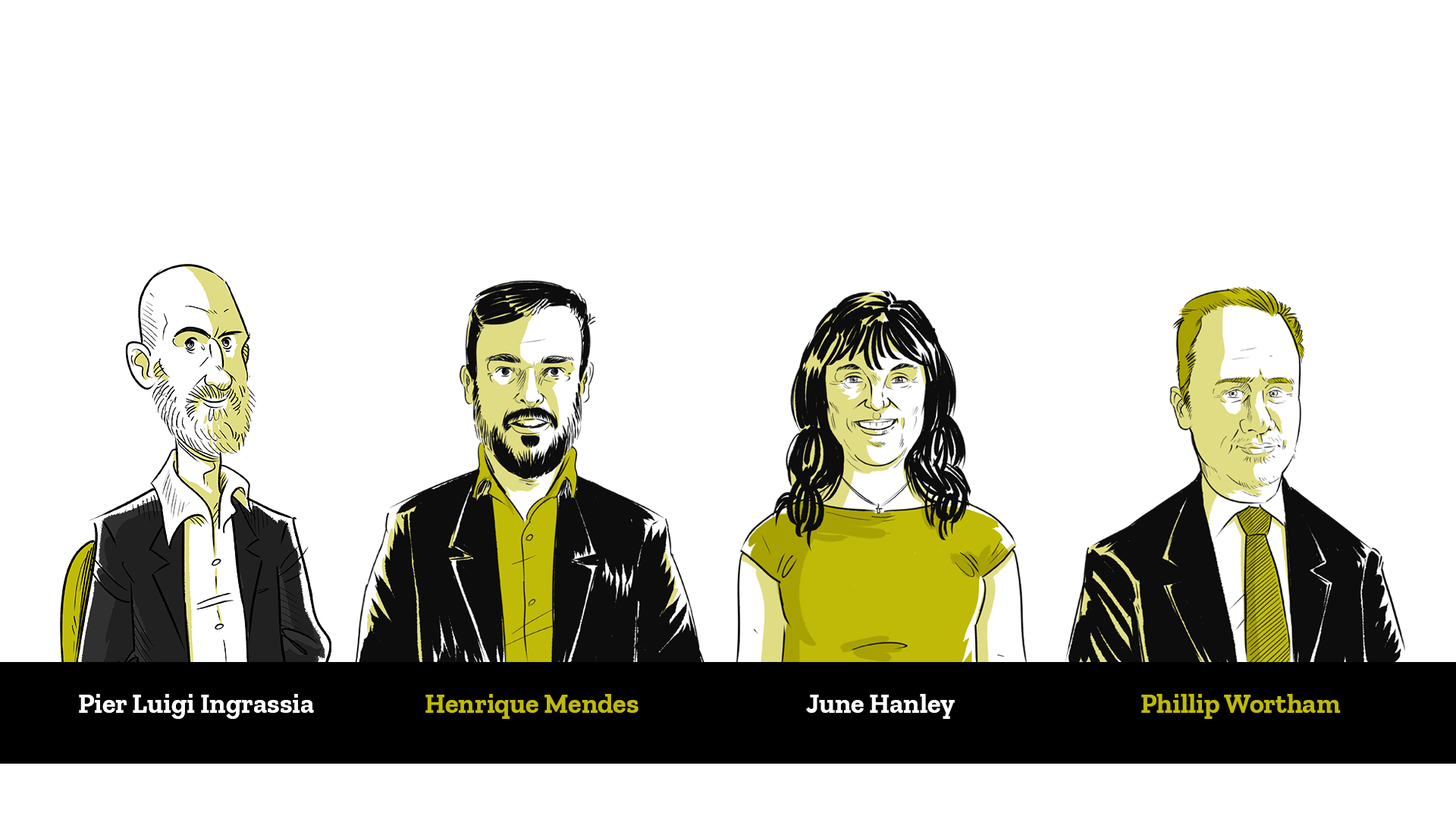
SimCast: The Higher Education Simulation Podcast is produced by the University of East Anglia (UEA) and hosted and produced by Tony Jermy and Lawrence Hill. More than 80 episodes have been published (84, to be exact, as of the end of September), released roughly every two weeks and typically lasting between 30 and 50 minutes. Audio is available on the main podcast platforms, and a video version is published on the UEA Health YouTube channel.


Asked how they decided to start a podcast, and why together, the hosts describe an unglamorous beginning. «We started the podcast because we suspected nobody was reading the minutes from our Faculty Simulation Special Interest Group!» says Tony, «A lively five-minute video seemed a much better idea and things just spiralled from there». The partnership predates the project. «Tony and I have worked together for over ten years» continues Lawrence, «We know each other’s strengths, quirks and opinions, and somehow it all just works. We’re both just passionate simulation educators, neither of us is short of an opinion, and we genuinely enjoy what we do. I think that chemistry and familiarity that helps to make the podcast work».
The format did not convince everyone at first. «We got some flack early on and I think there is still some academic snobbery around our ‘little podcast thing’,» the hosts say, but the audience has since grown beyond the university. «SimCast has been listened to in over 75 countries and we’ve spoken with educators from five continents, so we’re going to keep doing scholarship this way because it helps to make simulation CPD accessible and engaging».
What sets it apart
Podcasts on healthcare simulation are no longer rare, and the choice between them often depends on who is speaking and to whom. SimCast places itself within higher education, but the hosts locate its distinctive trait in the people it features. «SimCast has always been about the community. We love talking to people who are passionate about simulation, wherever they are in their careers». The programme is evidence-informed, they say, yet equally interested in what works in practice. «We tend not to go for the high-brow topics or cutting edge research, we’re just as happy talking to industry leaders and educators at the very start of their careers». And the tone follows from this approach as they clearly explain: «We take the topic seriously, but we don’t take ourselves too seriously. That’s probably what makes SimCast a little different».
Choosing topics and guests
The format varies from episode to episode. The hosts talk with educators, clinicians and technology providers, visit simulation facilities and occasionally record in front of a live audience at conferences. Themes range from teaching methods and professional development to emerging technologies, ethics and the place of different care settings in training. Asked what criteria they use to choose themes and guests, the hosts describe a flexible approach. «We find our guests and themes in all sorts of ways», Tony explains «Some approach us on LinkedIn, others we meet at conferences, and some we actively seek out because they have an interesting perspective on simulation». But Lawrence reveals a few more details: «Conferences are fertile ground for SimCast. We’re shamelessly opportunistic and will happily strike up a conversation with anyone who has something interesting to say about sim. We’re not fussy about job titles or seniority. If someone has an interesting angle on, we want to talk to them». When the supply of guests runs short, they add, «we occasionally resort to talking to each other!».
Asked which episode they liked most, and why, the two hosts chose differently. Lawrence picked “The Four Horsemen of the Debrief Apocalypse”, from episode eight. «Something about those debriefing archetypes really resonated with us,» he says. «We’ve actually turned that episode into a game called The Deck of Dodgy Debriefs and we’re bringing a prototype of it to ASPiH 2026, the national annual conference of the Association for Simulated Practice in Healthcare, so come and find us at our Thursday workshop, and have a go!». Tony chose “Desert Island Sims” (episode 63), their take on the BBC radio programme Desert Island Discs. «It made us think laterally about simulation while having a bit of fun. We try to maintain a certain level of decorum when interviewing guests, but when it’s just the two of us, we can let our hair down a bit, be a little more raucous, and enjoy ourselves!».
What it offers health professionals
For clinicians who use simulation only occasionally, or who are approaching it for the first time, the episodes work as short spoken introductions to current debates. Listening fits into a commute or a break between shifts, a point the literature on listening habits supports. For those who already work in simulation, the programme shows how colleagues in other institutions frame the same problems. The evidence reviewed above suggests that podcasts complement journal and magazine reading and formal training, and the effect of any single programme on practice remains to be studied.
Where to listen
SimCast is available on Apple Podcasts, Spotify, Overcast, Pocket Casts and Amazon Music, and in video form on YouTube.
References
Cho D, Cosimini M, Espinoza J. Podcasting in medical education: a review of the literature. Korean J Med Educ. 2017;29(4):229-239.
Kelly JM, Perseghin A, Dow A, et al. Continuing Education Evaluations of an Internal Medicine and a Pediatric Podcast. J Contin Educ Health Prof. 2023;43(4):283-286.
READ ALSO