





Inaugurated on 4 March 2026, the Centre for Simulation in Medical Advanced Training at the European University of Rome reproduces hospital environments with humanoid simulators, high-fidelity devices and virtual reality. A model designed for students, yet with the aim of opening up to ECM continuing education for healthcare professionals.
Introduction
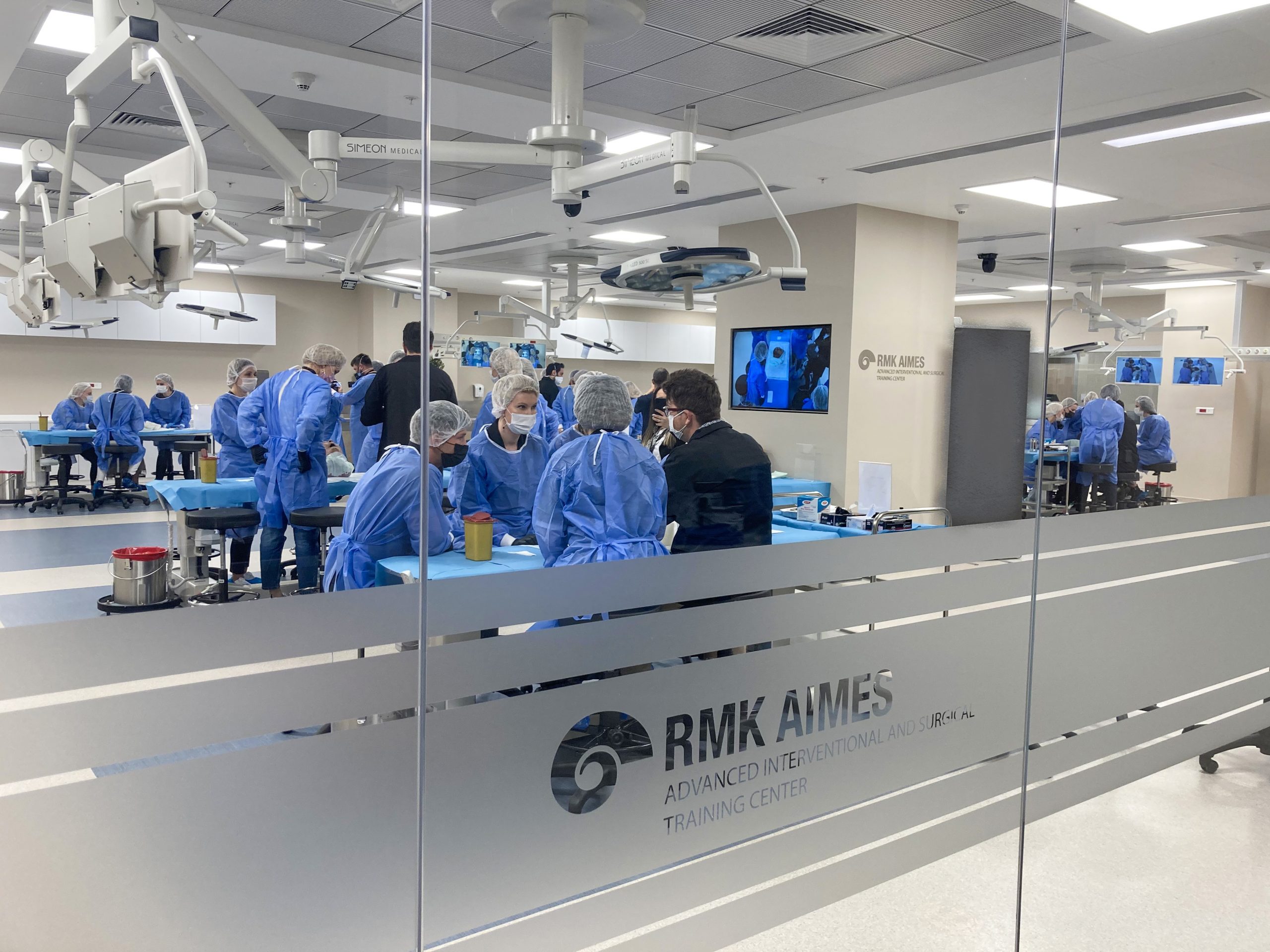
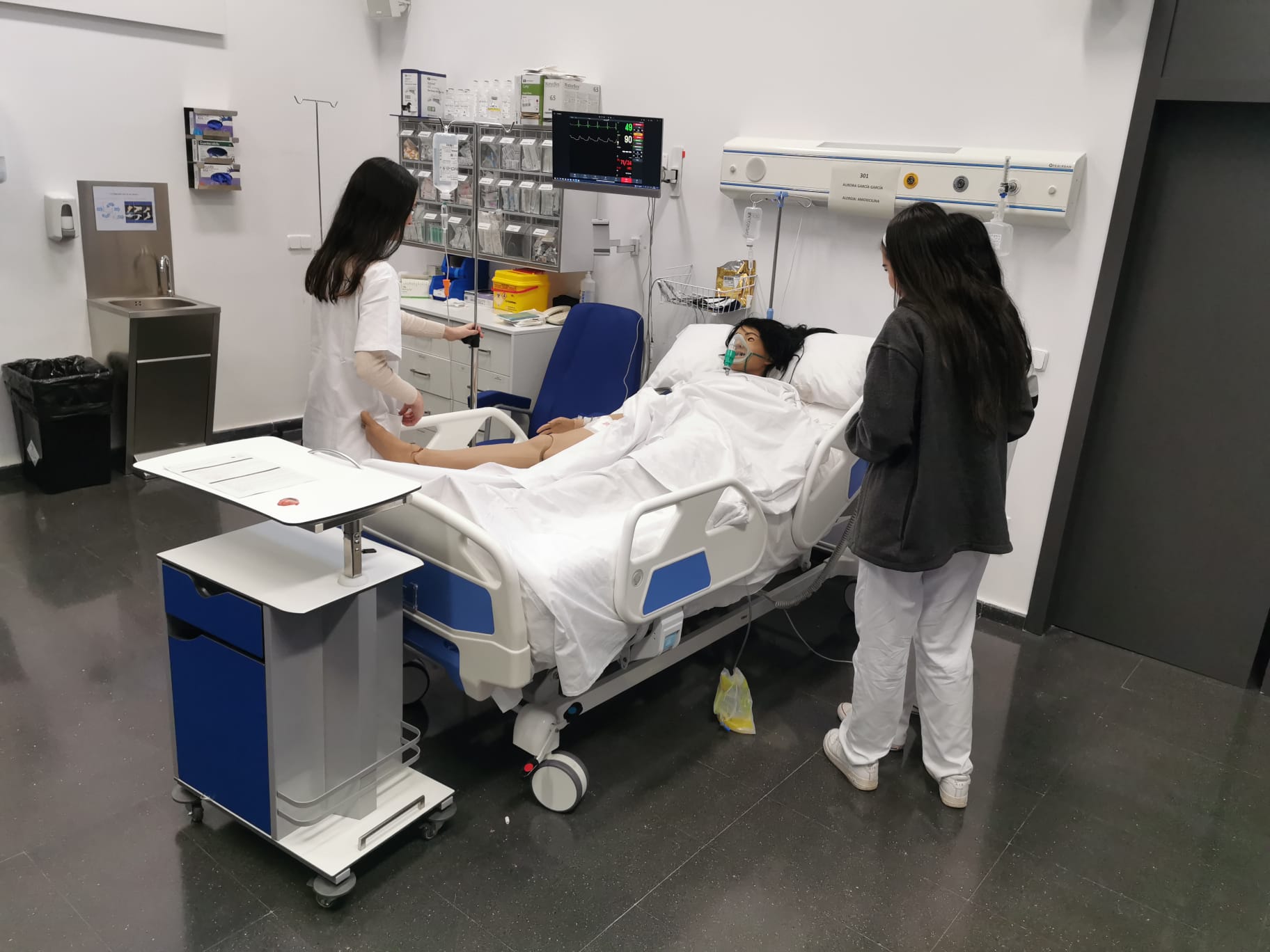
Stepping into CESMAT (Centre for Simulation in Medical Advanced Training) at the European University of Rome means immersing yourself in an environment that reproduces clinical practice with surprising realism. Monitors switched on, familiar sounds, working instruments: everything contributes to the feeling of being in a real hospital ward or in an operating theatre and intensive care unit.
CESMAT is an advanced simulation centre designed to offer students and healthcare professionals a hands-on, immersive learning experience with no risk to the patient.
Here theory meets practice in hyper-realistic scenarios, where it is possible to practise, make decisions and even make mistakes, turning every experience into learning.
High-fidelity simulators, digital tools and immersive environments make it possible to recreate complex clinical situations: from emergencies to the operating theatre, through to managing the relationship with the patient. The goal is to train competent, aware professionals who are ready to face the complexity of real clinical practice.
The origins of the project
CESMAT grew out of an intuition by Prof. Ernesto Greco, Dean of the Medicine and Surgery programme at the European University of Rome, with the aim of building an innovative educational model capable of integrating technology, advanced teaching and attention to the person.
The project was developed in collaboration with Accurate – Digit’Ed Group, a company specialising in advanced medical training, which contributed to the technological and methodological design of the Centre according to international standards.
Officially inaugurated on 4 March 2026, CESMAT had already been operational for students since the previous autumn.
From the outset it stood out for the completeness of its spaces and its attention to realism: much of the equipment and furniture comes from real healthcare facilities, helping to create an extremely lifelike environment. On entering the Simulation Room, students and teachers find themselves in a setting that resembles a hospital in every respect, making the learning experience even more engaging.

Spaces and technologies: an immersive experience
CESMAT was designed as an ecosystem in which technology and teaching work together to deliver experiential learning.
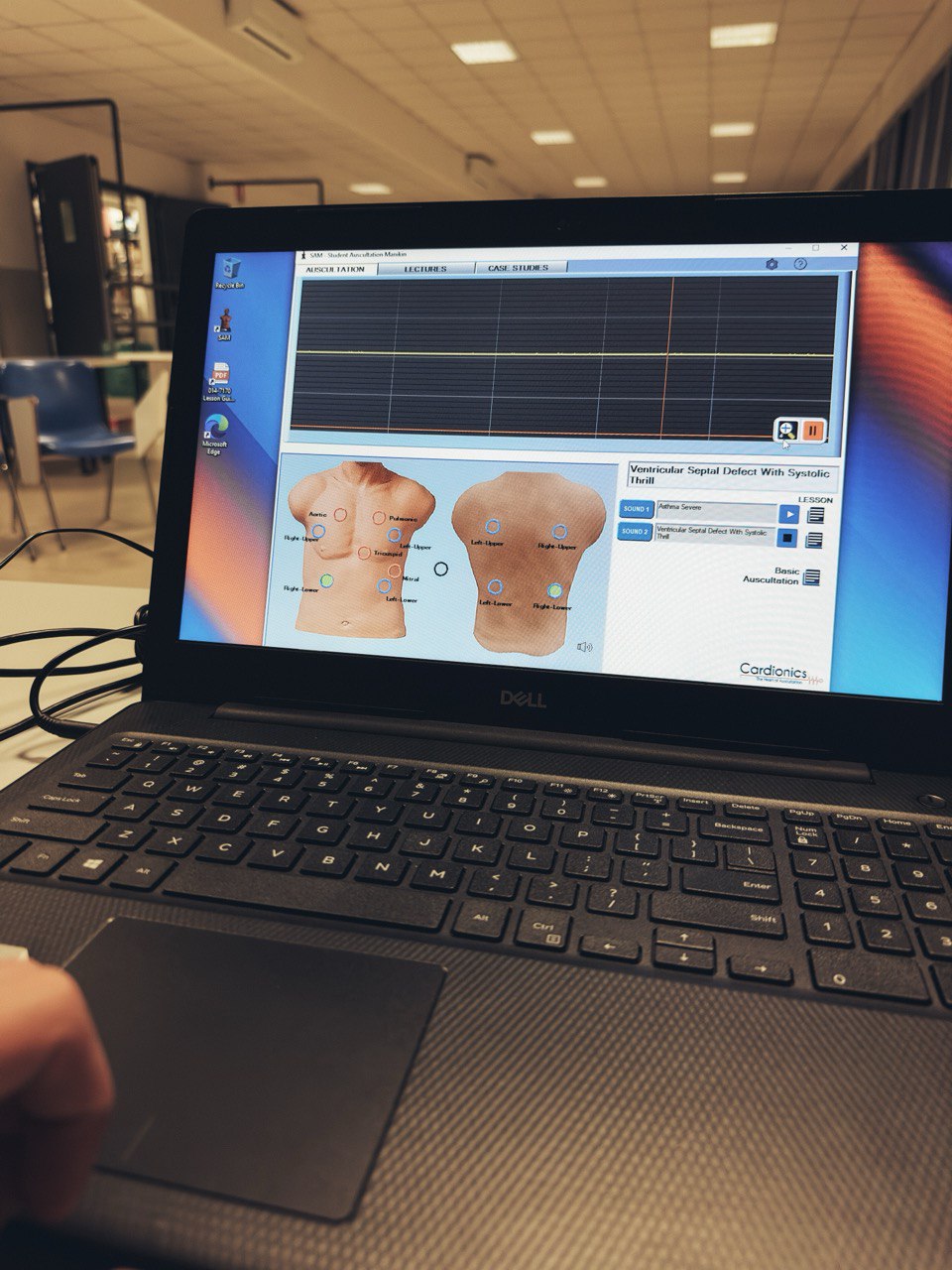
The main tools include high-fidelity humanoid simulators such as HAL® S5301 [Gaumard Scientific Company, Miami, USA] and AXEL [Nasco Healthcare Inc., Saugerties, USA], designed to reproduce complex clinical conditions and encourage realistic interactions. The former, for example, offers a high degree of immersion from a physical point of view too, as it can reproduce movements, changes of expression and physiological reactions such as crying, facial expressions and sweating, which make the scenario particularly realistic. ALEX, on the other hand, integrates features that support interaction analysis: for example, thanks to the mini-cameras set in the simulator’s eye sockets, it can record the behaviour of the student/professional during the conversation, supporting debriefing activities. The high level of realism of these tools makes it possible to develop not only technical and diagnostic skills, but also clinical reasoning, stress management and interpersonal skills. It is precisely to the latter that the Rector of the European University of Rome, Prof. Fr. Pedro Barrajón, L.C., draws attention: “Medical simulation is a fundamental frontier for the quality of clinical training, but we must never forget that behind every procedure, every protocol, every algorithm there is a person.”

Diagnostic training is supported by ultrasound simulators (BOB [Elevate Healthcare, Inc, Sarasota, USA]), which make it possible to integrate scanning with three-dimensional representations of anatomical structures. For emergencies, the centre uses advanced systems (SKILLQUBE [SKILLQUBE GmbH, Rauenberg, Germany]) for resuscitation and critical-care management scenarios, training rapid decision-making and teamwork.
The study of normal and pathological anatomy is made more intuitive by three-dimensional digital tools (Cadaviz [Immersivevision Technology Private Limited, Pune, India]) and by virtual reality (3D Organon® VR Anatomy [Medis Media Pty Ltd, Queensland, Australia]), which make it possible to explore the human body interactively and immersively.

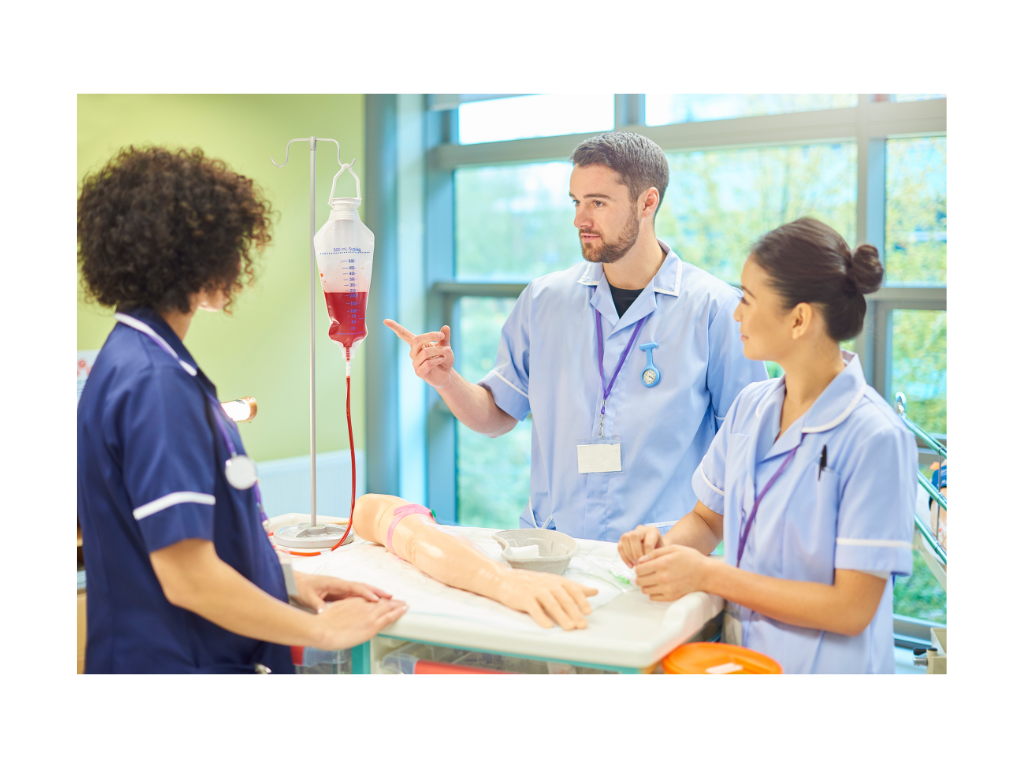
Finally, the skill lab makes it possible to acquire basic skills such as blood sampling, suturing and clinical measurements, developing manual dexterity and confidence.
More than a collection of technologies, CESMAT was conceived as a place where the student/professional becomes the protagonist of their own learning.
The educational model in the words of those who live it
The heart of CESMAT is its educational model, based on experiential learning. Here students and healthcare professionals can experiment, make decisions and engage with clinical complexity in a controlled setting. The principle guiding this approach is simple but powerful: “learning by making mistakes” before facing a real patient.
Simulations are not limited to technical gestures: they also involve clinical reasoning, communication and the management of professional-patient dynamics. Both students and healthcare professionals can engage with clinical complexity, while expert facilitators (physicians, lecturers, psychologists and psychotherapists from the European University of Rome) guide the experience and support critical reflection. Prof. Ernesto Greco, Scientific Director of CESMAT, points to the direction in which the Centre intends to move: “CESMAT will first and foremost be a training centre for university students, but not only that. Our idea is to build a bridge with institutions, using the Centre to deliver highly technological ECM-accredited continuing education courses, truly professionalising pathways, run on humanoid simulators and with the support of immersive virtual reality, capable of reproducing clinical scenarios of every kind, including emergencies, in an entirely lifelike way.”
A central element will be debriefing, the moment of reflection that follows each simulation.
In a non-judgemental climate, students and teachers analyse what happened, discuss the decisions made and turn mistakes into opportunities for growth. This step makes it possible to consolidate technical skills, clinical reasoning, communication and professional awareness. The multidisciplinary nature of the facilitators also makes it possible to integrate different points of view, from clinical management to the relationship with the patient. More than a concluding phase, debriefing is the moment when experience turns into learning. In addition, CESMAT’s pathways dedicated to communication skills and to the quality of the doctor-patient relationship are constantly evolving, underlining that caring means not only carrying out procedures, but also building a relationship, listening and recognising the patient as a person, not as a disease.
The students’ perspective is summed up by Lucrezia Giannini, student representative of the Medicine and Surgery degree programme: “For us students, CESMAT is a fundamental point of reference that integrates university teaching and hospital experience. Thanks to advanced tools and medical simulation, it enables concrete learning and an early clinical approach, helping us develop clinical reasoning, observational skills and a genuine clinical mindset from the very first years.”
Why simulation matters so much today
Medical simulation is today a fundamental tool for improving the quality of training and the safety of care.
According to the World Health Organization, around one in ten patients is affected by adverse events during healthcare. In this context, being able to train skills and decisions in a simulated environment becomes crucial.
Indeed, simulation makes it possible to tackle complex scenarios before contact with the real patient, reducing the risk of error and improving the preparation of professionals. “Never the first time on the patient” is the motto underpinning this fundamental philosophy.
A further benefit concerns the development of transversal skills: teamwork, communication and stress management. These elements are often decisive in clinical practice, yet difficult to acquire through direct experience alone.
Centres like CESMAT are therefore not only places of training, but genuine innovation laboratories for the healthcare system.
A look to the future
CESMAT aims to become a point of reference for medical and healthcare education based on advanced simulation, at both regional and national level.
Alongside university education, the Centre aims to develop continuing professional development programmes for healthcare professionals, building a bridge between the university and the healthcare system. The goal is to offer professionalising pathways capable of meeting the real needs of clinical practice.
Looking ahead, training will become increasingly interdisciplinary, involving different professional figures across the healthcare system and enhancing teamwork. In a constantly evolving healthcare landscape, CESMAT offers a concrete response: a place where technology, training and humanity come together to educate the professionals of tomorrow.
READ ALSO