




Student-Sim, developed at a UK university from 2022, asks healthcare students to design, deliver and debrief simulations for their peers. The article follows the approach from a paramedic pilot to the national SimStars competition and to staff development, and reports what students described about confidence, anxiety and links between theory and practice.
Background
Within higher education, simulation-based education (SBE) is typically developed through collaboration between academic staff and simulation technologists. Together, they design, facilitate, and evaluate simulation activities that support the development of clinical knowledge, technical skills, communication, and professional behaviours in undergraduate healthcare students. Facilitation encompasses several key activities, including learner pre-briefing, support during simulation participation, and structured debriefing and feedback following the experience.
The quality and effectiveness of SBE are underpinned by professional standards. Organisations such as the Association for Simulated Practice in Healthcare (ASPiH) and the International Nursing Association for Clinical Simulation and Learning (INACSL) have developed evidence-informed standards that guide simulation design, facilitation, faculty development, and evaluation (Diaz-Navarro et al., 2023, Watts et al., 2021). These standards promote best practice across a range of areas, including psychological safety, equality, diversity and inclusion, structured debriefing, and the preparation of simulation faculty.
More recently, NHS England introduced the Becoming Simulation Faculty programme to further strengthen simulation capability across healthcare education and practice. Available to educators, clinicians, and simulation technologists working in both higher education and the NHS, the programme combines self-directed online learning with face-to-face workshops. The programme reinforces the ASPiH standards and promotes evidence-based approaches to delivering high-quality simulation experiences.
Simulation-based education has been defined in numerous ways within the literature. For this case study, SBE is defined as:
Following a training or simulation needs analysis, robust educational design is essential to ensure learning activities address the needs of learners and achieve intended learning outcomes (Watts et al., 2021). Many institutions use locally developed simulation design templates; however, variation in design approaches can hinder consistency and quality assurance.
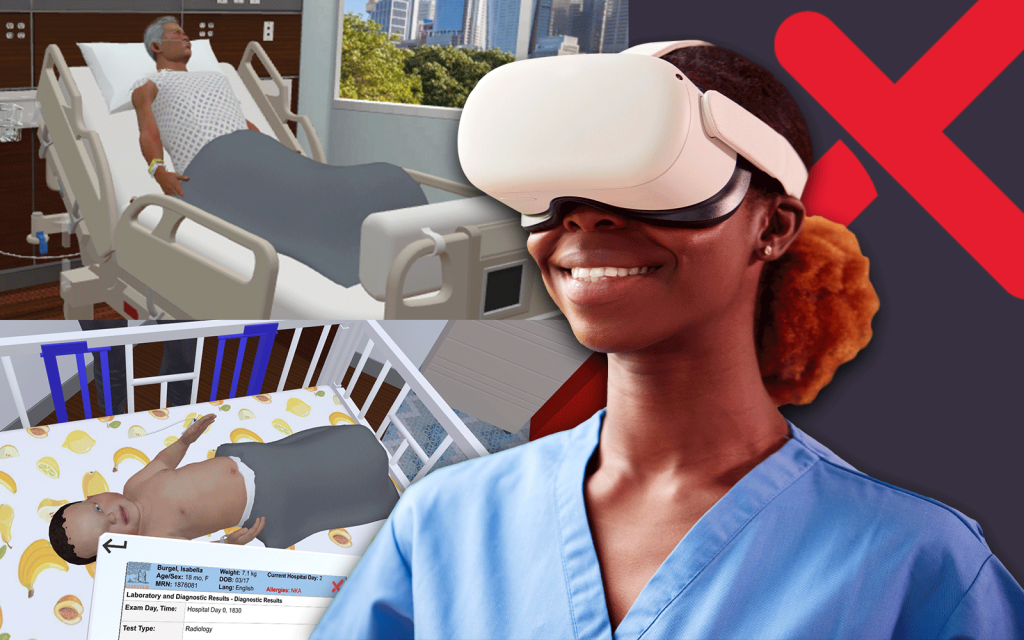
To standardise simulation practice across three campuses, our institution adopted the online simulation platform iRIS (www.irishealthsim.com). The platform provides a structured and consistent approach to the development, delivery, review, and evaluation of simulation-based education for teaching, learning, and assessment. Widely used internationally, iRIS supports collaborative working between academics and simulation technologists while facilitating the sharing, review, and auditing of simulation activities across programmes and campuses. Through this approach, learners benefit from simulation experiences that are both evidence-informed and aligned to their personal and professional learning needs.
While many of these developments have focused on supporting simulation facilitators working in academic, clinical, and workplace settings, little attention has been paid to developing students themselves as simulation designers and facilitators. This gap is noteworthy given that health and social care students are frequently expected to undertake mentoring, teaching, coaching, and leadership responsibilities as they progress towards professional registration.
The impetus for exploring a student-led approach emerged from feedback indicating that some students were not fully engaging with simulation activities. Simultaneously, opportunities were being sought to enhance learning within existing “learning to teach” curricula across several programmes. These factors prompted consideration of a different approach: positioning students not solely as participants in simulation, but as creators and facilitators of simulation experiences. This marked the beginning of what would become known as Student-Sim.
The Birth of Student-Sim
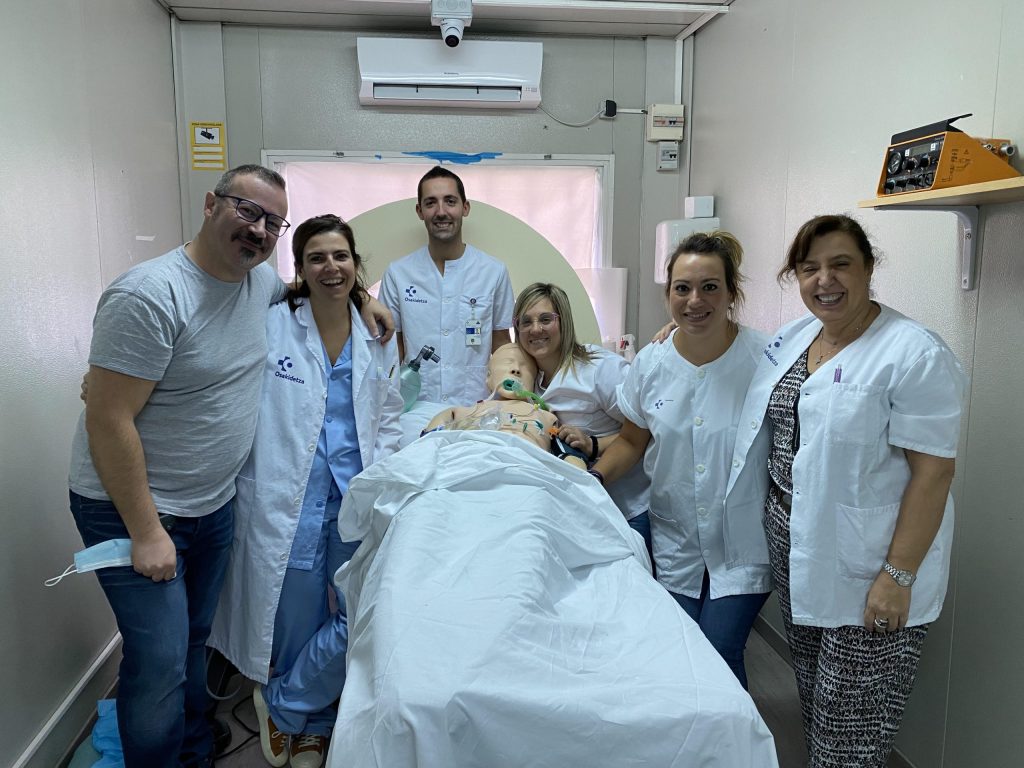
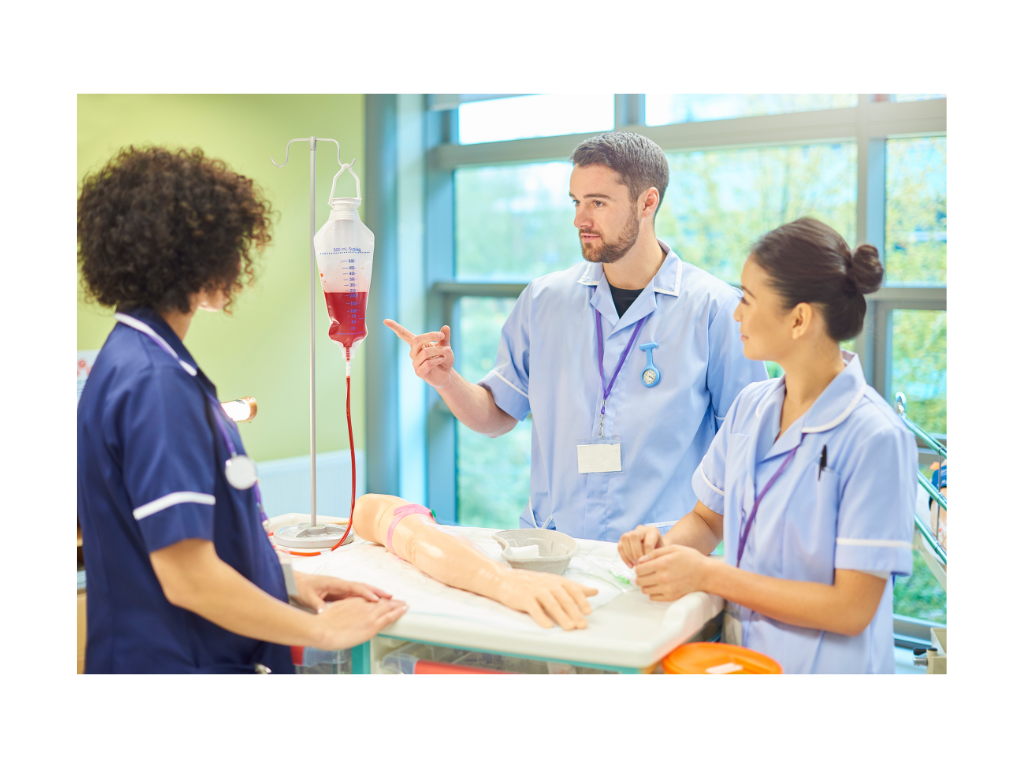
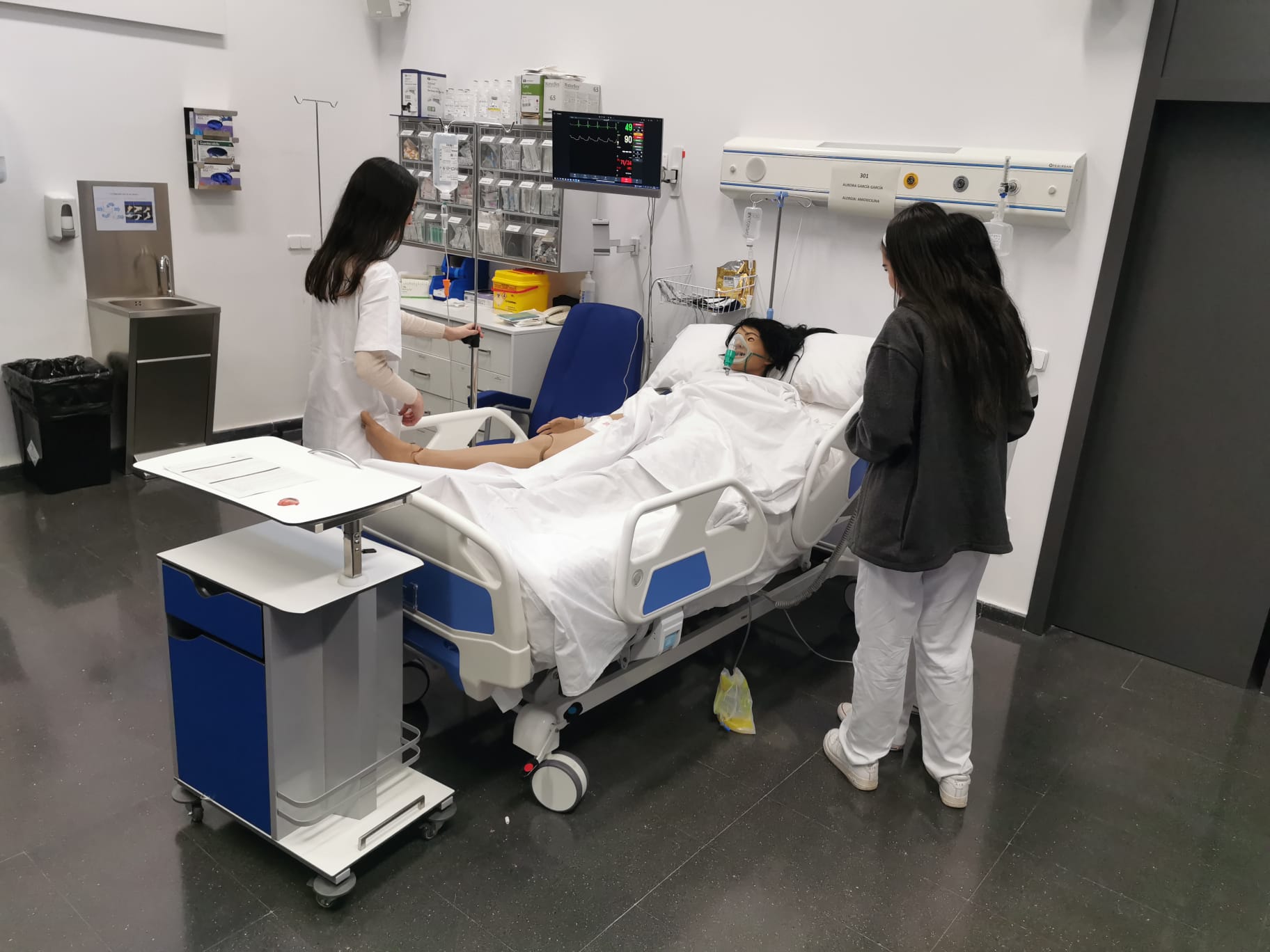
In 2022, a pilot project was undertaken in partnership with two Paramedic Science lecturers. Four simulation-based ‘Train the Trainer’ programmes were delivered to 76 final-year paramedic students. Working in small groups, students were required to design, facilitate, and debrief simulation scenarios for their peers.
To support this process, students used a paper-based version of the iRIS simulation design template alongside supplementary guidance materials. In groups of four to six, they designed fifteen simulation scenarios which were subsequently delivered to fellow students. Two days after completing the training programme, each group led the pre-brief, facilitated their simulation activity, and conducted a debrief using the TALK framework (Diaz-Navarro et al., 2021). Throughout the process, a simulation educator, a paramedic lecturer, and a simulation technologist supported students.
The use of the TALK framework was deliberate. This debriefing model was being applied in some professional practice settings, it provided students with an authentic structure for facilitating reflective discussions while simultaneously developing skills that would transfer into their future healthcare roles.
Evaluation data collected following the programme demonstrated overwhelmingly positive outcomes. Students reported that designing simulations required them to revisit theoretical content, critically review current evidence, and engage with relevant clinical guidelines. They described improvements in knowledge, clinical reasoning, confidence, and decision-making capability.
An unexpected but significant outcome was a reduction in learner anxiety related to simulation. Students reported that understanding how simulations are designed and facilitated helped demystify the process. Many no longer viewed simulation as a hidden assessment strategy and instead recognised it as a valuable educational tool that supports learning and professional development.
Students frequently based their simulation designs on authentic clinical experiences they had encountered during placement learning. Consequently, they perceived the scenarios to be highly relevant, realistic, and reflective of challenges likely to be encountered as newly qualified practitioners. Taking ownership of the design process appeared to increase learner engagement and foster deeper connections between theory and practice.
Participation in debriefing sessions, both as facilitators and learners, represented another significant area of growth. Students reported enhanced confidence in discussing clinical practice, providing feedback, and engaging in reflective conversations. Many recognised that these skills would support their transition into professional practice and contribute to their development as future registrants, supervisors, and educators.
The project demonstrated many characteristics of phenomenon-based learning (Adipat, 2024), with students integrating knowledge from academic study, simulation, and clinical practice to address authentic professional challenges. The success of the initiative laid the foundation for what later became known as Student-Sim.
Student-Sim: National and International Developments
In 2023, the Association for Simulated Practice in Healthcare (ASPiH) were exploring new approaches to increasing student membership and engagement within the simulation community. As part of this work, Lorraine Whatley of Oxford Brookes University, who led the ASPiH membership portfolio, sought opportunities to strengthen student involvement in SBE. Through a collaboration between ASPiH, the iRIS development team, led by Alex Clark and Phil Purver, and me, the concept of a national student simulation design competition was developed. This initiative became known as SimStars and was delivered using the Student-Sim platform.
Internationally, many simulation organisations host SimWars, in which teams compete in the management of complex, high-acuity clinical scenarios under time pressure. While these events successfully showcase clinical performance, they primarily focus on simulation participation rather than simulation design. The SimStars concept sought to offer a different approach by placing student creativity, educational design, and facilitation skills at the centre of the competition. The intention was to provide a platform through which students could demonstrate their understanding of simulation education while addressing authentic healthcare challenges relevant to the UK educational and practice context.

This approach aligned closely with ASPiH’s commitment to learner engagement and co-production within SBE. These activities supported the development of the ASPiH Student Special Interest Group (SIG), launched in 2024, which continues to provide opportunities for networking, collaboration, and professional development among students with an interest in simulation. The SIG is led by students for students and supported by ASPiH.
The inaugural SimStars competition, held in 2023, attracted sixteen submissions from healthcare students representing a range of professional disciplines and higher education institutions. Following an initial review process, four finalist teams were invited to present at the ASPiH annual conference. During the event, students showcased and facilitated their simulation activities using the newly developed Student-Sim platform, providing conference delegates with insights into both the educational design process and the resulting learning experiences.
A particularly noteworthy outcome emerged during the post-competition reflections and debrief discussions. Students described benefits that closely mirrored those identified during the original Student-Sim pilot conducted in 2022. These included increased confidence, deeper engagement with learning materials, stronger links between theory and practice, improved communication skills, and a greater appreciation of the educational principles underpinning simulation-based learning. Such findings suggested that the positive outcomes observed in the original institutional project could be replicated at a national level across diverse student populations.
The success of the inaugural competition established SimStars as a sustainable initiative within the UK simulation community. The competition has continued to evolve and is now entering its third year, attracting growing interest from students, educators, and simulation organisations.
Beyond the UK, the concept has also gained international recognition. Following the success of the ASPiH event, colleagues from the Australian Society for Simulation in Healthcare (ASSH) adopted the SimStars model and incorporated it into their own national conference programme. This international uptake demonstrates the wider applicability of student-led simulation design and highlights growing recognition of students as active contributors to the development of simulation-based education rather than solely recipients of it.
The continued expansion of SimStars reflects a broader shift within healthcare education towards learner partnership, co-creation, and authentic active learning. By positioning students as designers, facilitators, and evaluators of simulation activities, Student-Sim has challenged traditional assumptions regarding the role of learners within SBE. Student design and facilitation has demonstrated the potential of simulation as a vehicle for clinical learning and the development of leadership, educational, and professional capabilities.
Student-Sim: Local Implementation and Institutional Development
Since its introduction in 2022, Student-Sim has become embedded within a range of undergraduate healthcare programmes across my institution. Students from different professional disciplines and year groups have been actively involved in the design, facilitation, and evaluation of SBE activities. Rather than existing as an isolated innovation, Student-Sim has been integrated into programme timetables and curricula, ensuring that simulation design and facilitation are recognised as valuable components of professional education.
A variety of approaches have been employed to maximise learning opportunities and foster collaborative learning. For example, second-year students have designed and facilitated simulation activities for first-year cohorts, creating opportunities for near-peer teaching and learning. In other instances, students have been tasked with incorporating specific technical and non-technical skills into their simulation designs to ensure alignment with module learning outcomes and professional competencies. This approach has enabled students to engage with curriculum content from a different perspective, moving beyond participation in simulation to become active creators of learning experiences.
As the initiative evolved, two significant developments were introduced to strengthen its educational impact.
The first was the incorporation of structured reflection following simulation facilitation. After delivering their simulation activities, students are required to produce either an individual or group reflective account focused on their experiences as simulation designers and facilitators. Using recognised reflective frameworks, students explored their learning, challenges, successes, and areas for future development. Rather than relying solely on traditional written reflections, students are encouraged to share their insights through a variety of creative formats, including posters, presentations, blogs, educational resources, and games. This process promoted deeper levels of critical reflection, strengthened links between theory and practice, and facilitated peer-to-peer learning through the dissemination of experiences across cohorts. A further example of phenomenon based learning.
The second development involved the adoption of the Student-Sim platform as a staff development tool and its integration into the institution’s broader simulation-based education framework. Recognising the value of learning through simulation design, the institution extended the principles underpinning Student-Sim to academic, research, and technical staff engaged in student-facing activities. As part of this initiative, staff are required to develop two simulation designs using the Student-Sim platform. Through the integrated communication and mentoring functions, staff can seek guidance from experienced simulation educators and technologists throughout the design process.
This design activity has become a key component of institutional simulation faculty development and contributes towards completion of the university’s professional development programme, Simmersive Training and Development Framework.

By engaging staff in the same design processes experienced by students, the initiative promotes a shared understanding of simulation pedagogy, enhances simulation capability across the institution, and supports the development of sustainable simulation expertise within academic and technical teams.
The impact of Student-Sim has extended beyond local implementation. The work has been disseminated through presentations at national and international conferences, generating considerable interest in student-led approaches to simulation-based education. Lessons learned from the project have also informed further innovation within the iRIS platform and contributed to the development of Facilitator-Sim, a new platform designed to support simulation faculty development through guided simulation design and facilitation activities.
Taken together, these developments demonstrate how Student-Sim has evolved from a student engagement initiative into a broader institutional strategy for developing simulation capability. By empowering both students and staff to design, facilitate, and critically evaluate simulation activities, the initiative has fostered a culture of collaboration, reflection, and educational innovation while strengthening capacity for high-quality simulation-based education across the institution.
Summary
Student-Sim represents a shift in the role of learners within simulation-based education, moving students from participants to partners in the design, facilitation, and evaluation of learning experiences. Originating from a local initiative within paramedic education, the approach has evolved into an institution-wide strategy, informed the development of new simulation technologies, and contributed to national and international simulation initiatives.
As healthcare education continues to embrace partnership working and learner-centred approaches, Student-Sim offers a practical model for engaging students as active contributors to simulation-based education. The continued growth of Student-Sim, SimStars, and related initiatives suggests that student-led simulation has the potential to become an important component of future simulation practice, faculty development, and healthcare professional education.
Adipat, S. (2024) ‘Transcending traditional paradigms’. Frontiers in education (Lausanne), 9. Available at: https://doi.org/10.3389/feduc.2024.1346403.
Diaz-Navarro C, Laws-Chapman C, Moneypenny M, Purva M. The ASPiH Standards – 2023: guiding simulation-based practice in health and care.
Available from https://aspih.org.uk
Diaz-Navarro, C., Leon-Castelao, E., Hadfield, A., Pierce, S., & Szyld, D. (2021). Clinical debriefing: TALK© to learn and improve together in healthcare environments. Trends in Anaesthesia & Critical Care, 40, 4–8. https://doi.org/10.1016/j.tacc.2021.07.004
Watts, P. I., McDermott, D. S., Alinier, G., Charnetski, M., Ludlow, J., Horsley, E., Meakim, C., and Nawathe, P. A. (2021). ‘Healthcare Simulation Standards of Best Practice™ Simulation Design.’ Clinical Simulation in Nursing, 58, 14–21. https://doi.org/10.1016/j.ecns.2021.08.009
Wilford, AR (ND) ‘An Exploration Into what Factors Cause healthcare Simulation Facilitators To Change Simulation Designs’ (unpublished doctoral thesis), Milton Keynes, The Open University
DECLARATION OF THE USAGE OF AI
I used Grammarly and Microsoft Word only to check spelling and grammar. When Grammarly suggested rephrasing, I did not accept the suggestions as they were, but rewrote the sentences in my own words. All content is my own, and no AI tools were used to generate it.
READ ALSO